Sunday, 14 May 2023

Last gliders into Berlin, April 1945


  On April 27, 1945, Gatow airfield fell into the hands of the Red Army. With the loss of Berlin's last airfield for heavy aircraft, the main east-west axis in Berlin was used as an adhoc landing ground by smaller aircraft including a handful of re-supply DFS 230 Lastensegler cargo gliders. The participation of the gliders was symbolic in every sense of the word. G. Schlaug writes;

"..On the night of April 28-29, five DFS 230s took off from Rerik with Uffz Kestner, Uffz Schleicher, Uffz Kugler, Ogfr Heine and Gefr Heim at their controls. The east-west axis was under intense artillery fire and no landings were attempted. Uffz Kugler took advantage of the fires burning in the centre to locate a flat area and carried out a landing near Tegel. His cargo of anti-aircraft shells was immediately recovered and used by a nearby Flak battery. Kugler, like his comrades, was carrying an authorisation of safe passage which allowed him to climb into one of the last Ju 52s leaving the area and return to Rerik. Heim was forced to make an emergency landing before reaching Berlin, probably due to the failure of the He 111 that was towing him. Nothing is known about the fate of the other three pilots. On the night of March 29-30 (or March 30-April 1?), two more DFS 230s flew to Berlin. Wilhelm Schneider's machine was hit by flak and its pilot, seriously wounded, landed near the east-west axis and was immediately captured by the Soviets. The pilot of the other glider, Uffz Göbel, was killed attempting a landing..."

Mark Felton's latest video attempts to describe some of the Luftwaffe's last operations into Berlin during April 1945 and specifically those adhoc glider re-supply sorties flown by TG 30 He 111s towing DFS 230 gliders.


Wednesday, 26 April 2023

new from Lela Presse - Luftwaffe over Belgium and Stukas in the Blitzkrieg


"La Luftwaffe en Belgique"  Part II  by Jean-Louis Roba and Peter Taghon.  The second installment of the Roba/Taghon story of the Luftwaffe in Belgian skies. Daily activities in diary format covering both day fighters and night operations.


BA  #104    " Stukas dans la Blitzkrieg " Part 1 

The story of the Stuka units over Poland and Scandinavia, while the last eight pages are devoted to the dates 10 and 11 May in the West. (97 pages, photos, maps profile artworks, 13 euros 50)


Avions magazine #252  - features the second part of 'Fw 190 in the Med 1942-43' and 'Dornier night fighters' Part I. The continuing Ukraine war coverage details the combats for Snake Island. I don't always agree with author Christophe Cony's stance on Ukraine's share of responsibility for Putin's illegal invasion but 'Avions' provides easily the best coverage anywhere of the ongoing conflict in the Ukraine..

Much more on  the website. Click on the image below to go there now!

Tuesday, 25 April 2023

No 1 Squadron Hurricanes in France 1939-40 - Sqn Leader 'Bull' Halahan and 'blue 109s'


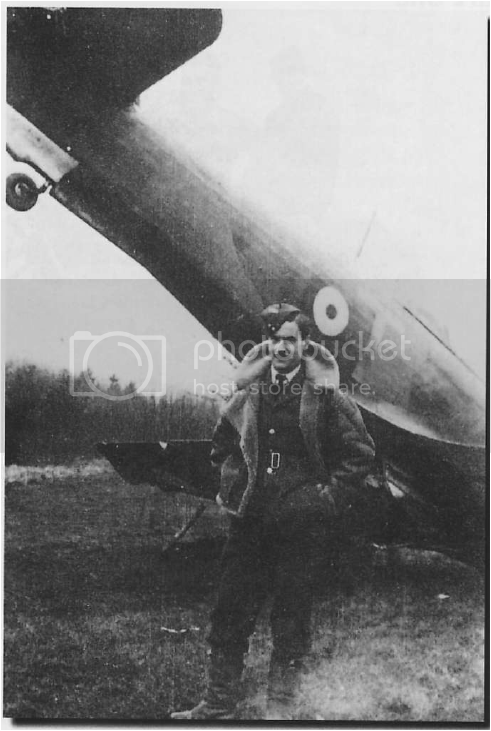
During late 1939 No. 1 Squadron was commanded by Squadron Leader Patrick J. H. ‘Bull’ Halahan. While airmen from all over the Empire served in 1 Sqd,  the Irish squadron leader earned a certain notoriety. Patrick Halahan, a Dubliner, nicknamed ‘Bull’ - apparently because of his sturdy broad-shouldered physique - had what might then have been referred to as a 'strong character'. He spoke with a thick Irish accent and according to one account, " his language was colorful and down-to-earth. " As part of 67 Wing, 1 Squadron was sent to France during October 1939 along with No. 73 squadron as part of the air component of the BEF (British Expeditionary Force) assigned to escort and protect the BEF's Fairey Battle bomber and recce machines. No. 1 Squadron was to settle in at the airfield at Vassincourt (Champagne-Ardennes region), while No. 73 Squadron under Squadron Leader Brian W. ‘Red’ Knox was stationed at Rouvres. The field at Vassincourt was perched above the small village of Neuville where No 1 squadron’s pilots were quartered in private lodgings. It was, according to the pilots, a ‘real hole’. Squadron Leader Halahan soon had good cause to call upon the services of the new French interpreter assigned to the unit - a certain Jean Demozay. With Jean’s help the pilots were able to establish their ‘mess’ in the local town hall, rather than utilize the ancient and run down buildings on the airfield. This was the first real contact between the two men and their paths would subsequently cross on several more occasions.

'Bull' was soon embroiled in struggles with RAF command. This became evident when he insisted on back armour being installed in the Hurricane. The authorities believed this would disrupt the aircraft's centre of gravity, but Halahan took the armour from a Fairey Battle bomber and had it installed. It was soon apparent that it did not affect the Hurricane’s handling. He demanded – against regulations – that the convergence distance for the eight machine guns be reduced to short range, which increased the effectiveness of the Hurricanes. 


Pilots of No 1 Squadron at Vassincourt show off one of their Hurricanes to Mr Mahmoud Abu Fath, a member of the Egyptian Parliament, January 1940. Looking at the camera is Flying Officer Billy Drake, who became a 20-kill ace and survived the war.


Below; Thierry Dekker artwork of No. 1 Sqd Hurricane Mk 1. s/n L1679 'JX-G' of F/O Paul Richey, Vassincourt, May 1940. Note the French-style rudder stripes. Note the aircraft is fitted with a reflector gun sight. The photo also appears to show aluminium or blue lower surfaces (rear fuselage) - as Richey put it in his account ; " all German aircraft were difficult for us to see from below as they were painted duck-egg blue. Our  [..aircraft ] stood out like chequer-boards. Not without a struggle 'Bull' had our machines painted blue underneath, a colour subsequently adopted for all RAF fighters..."


As noted by Richey in his memoir 'Fighter Pilot' 'Bull' also filed a report regarding the lower surface colours of RAF fighters which was forwarded to AASF HQ and dated May 7, 1940 and had originated from test flying a captured Bf 109 against Hurricanes on May 2, 1940 at Orleans. S/Ldr Halahan wrote:

" ..during these tests one point became abundantly clear, namely that the 109, due to its better under camouflage, was very much more difficult to spot from underneath than was the Hurricane. This gives the 109 a definite tactical advantage, namely when they are below us they can spot us at long distance, which we when below them find most difficult. As in all our combats initial surprise is the ideal at which we aim, I strongly recommend the undersides of Hurricanes be painted a duck egg blue, the roundels remaining the same, as it is the contrast between the black and the white only which is noticeable from below.."


Above, Bull Halahan (CO) and Johnny Walker in front of 'L', still apparently with black/white undersides


Below; P/O Peter 'Boy' Mould of 1 Sqd is often credited with scoring the first RAF victory over France on Oct 30, 1939 in Hurricane L1842 coded 'T'. In fact he did not - a JGr. 152 Bf 109 D flown by Gfr. Joseph Scherm was shot down by return fire when attacking a Battle of No. 103 Sqd on September 27. Three weeks later a Hurricane coded 'T' was lost after a mid-air collision with a French H-75A. The Hurricane was flown by Sgt A.V. Clowes (of JX-B with wasp fame) and the photo shows Clowes alongside the machine - note the 'T'  - the serial 'JX' appears to have been overpainted, as was common practice at the time. While codes change in service of course this may well have been Mould's aircraft.


Loss report for P/O Mould, flying a replacement Hurri, coded "T" on May 10, 1940
Type: Hurricane Mk 1
Serial number: P2649, JX-T
Operation: Patrol
Damaged: 10/05/1940
P/O W.O. Mould - unhurt
Took off from Vassincourt. Hit by return fire from Do 17 engaged east of Rouvres 05.00 hrs. Returned with slight damage and punctured tyre. Aircraft damaged but repairable.


Another Irish pilot to benefit from Halahan’s leadership in 1 Sqd was John Ignatius Kilmartin from Dundalk, County Louth. ‘Killy’ claimed several aircraft destroyed during the Battle of France, including a Messerschmitt Bf 109 on 12 May 1940.  (claimed as a Heinkel He 112). On that same day, his leader, ‘Bull’ Halahan shot down a ‘real’ Bf 109 before being brought down himself. Luckily, he was unhurt and managed to return to his unit. He continued to lead them to numerous victories in the air until the exhausted Squadron was granted a return to Britain on 24 May. Both pilots became instructors at No. 5 Operational Training Unit at RAF Aston Down. Halahan became its commander, but Kilmartin was sent to RAF Tangmere to participate in the Battle of Britain, shooting down two aircraft in the first three days. 

Surprisingly the experienced Halahan was not involved in the Battle of Britain. In April 1941 he led a formation of 24 Hurricanes, taking off from the aircraft carrier HMS Ark Royal and flying to the besieged Malta, enabling the island to hold off Italian-German air attacks. However, in June 1941, he took responsibility for a riotous drinking spree of some of his men and was transferred to the Middle East. With his career stalled, he retired from the RAF in 1943. This, together with his absence from the Battle of Britain, may be the reason why he is largely forgotten. 

The memoirs of Richey and Drake, two direct witnesses suggest other reasons. For example, Halahan is described as  having a certain contempt for the French ally and made no secret of it according to the Francophile Richey. Drake describes him as an unwelcoming fellow who did not wish to have any ongoing contact with his men. He lived in a chateau or, although married, indulged in adultery with local girls (his Francophobia was therefore 'two-speed'). It is perhaps for his 'harsh' temperament ('Bull') and his various misdemeanours that led to his eclipse rather than for his 'non-participation' in the Battle of Britain.... 

Kilmartin had a much longer career, flying Typhoons and Thunderbolts and taking command of several units from Scotland to Sierra Leone and from Middle Wallop to Sumatra. After the war, Kilmartin stayed in the RAF and held several positions in NATO until 8th July 1958, when he retired as a Wing Commander.


Also on this blog;


Thursday, 23 March 2023

Oberfähnrich Wolfgang Rose 4./JG 26 - 'Ehrenbuch JG 26'


   The JG 26 'Ehrenbuch' is a large volume containing brief biographical details and portraits of every pilot who flew with JG 26. Read in conjunction with the "Gedenkblätter für die gefallenen Angehörigen des Geschwaders" ('memorial cards' for the fallen members of the Geschwader   - genitive case ending on Geschwader, not a plural!) it is possible to build up a picture of these young Nachwuchs ('new growth') who flew and fought for literally only a handful of sorties before being shot down and killed.
 
Born on 28 September 1924 in Stollberg (district Erzgebirgskreis, southwest of Chemnitz), Wolfgang Rose arrived at JG 26 on 30 April 1944 aged 19 years old. He had entered the Luftwaffe in November 1942 directly from school and became an Oberfähnrich on 1 March 1944. A tall thin lad, well-liked, he was a keen airman and as might be expected 'einsatzfreudig'  or 'keen to see action'. He was posted from his operational training unit 4./ Jagdgruppe West to 4. Staffel and flew just 7 combat sorties (Feindflüge) before he was shot down and killed on 27 June 1944. The Ehrenbuch gives a very short account of his death - his Staffel was landing after a sortie when they were surprised by Allied fighters.  At the controls of his Fw 190 A-7 'black 15' (WNr. 431159) Rose had already set up to land but 'saw the danger' and attempted to pull up and go around. He failed to detect the P-47 or P-51 that slipped in behind him. He was hit and shot down. He crashed to his death 1 km east of  Ennencourt and was buried at the German cemetery in Beauvais. Rose was credited with a single Abschuss - a so-called  'wirksamer Beschuss'  ('effective fire'). A note in his memorial card attests to his 'strong' ideological and political outlook ('seine weltanschauliche und politische Einstellung war gefestigt '). His rank of Ofhr. has been crossed out and 'Leutnant' added - presumably posthumously along with the award of the EK I in December 1944.

An interesting account from a JG 26 Nachwuchs who survived is Heinz Gomann's " Und über uns der Himmel - Fliegergeschichten vom Jagdgeschwader 26 " - flying stories from JG 26. (Vowinckel Verlag, 1996).  Gomann provides an apt description of the non-existent combat value of an inexperienced fighter pilot during his first missions at this stage of the war;

"..The Staffel takes off to counter incoming Spitfires. I stay close to my Rottenführer. Suddenly everything starts to turn like crazy. I have no idea why. After landing, they tell me that we were caught up in dogfights with the Spitfires. I didn't see any. Apparently that's what happens to everyone at the beginning (...)…"


Also on this blog;

Saturday, 18 March 2023

JG 11 Fw 190 'low-viz' camouflage schemes

On page 38 of his book 'Frontal durch die Bomberpulks' Fritz Engau (I./JG 11) writes;

"...When I arrived at I./JG 11 in early 1944 a number of our Fw 190s, including the Kommandeur's machine, had been sprayed in a light grey scheme overall, toning down the usual mottle finish, while on all our machines the Haken- and Balkenkreuze were only barely visible ('schwach erkennbar')...It has often been imagined that this unusual finish served as 'camouflage' (in 'English' in the German text) so that our opponents would find it harder to pick us out as German machines in the air..[..] You could hardly disguise the distinctive form of the Fw 190 or the Bf 109 in the air. In addition all JG 11 fighters displayed a yellow fuselage band which was highly visible. Ultimately the reasons for adopting the finish were obscure and it can be supposed with a certain degree of certainty they probably had more to do with  testing of colours/paint finishes- than any other consideration. Certainly at the time the subject was not one we pilots discussed....."

The images below are just two from a series that appear in the outstanding Jochen Prien Jagdfliegerverbände series (Volume 13, 1944 - Defending the West) depicting III./JG 11 Fw 190s with over-painted crosses. Note on the 'overhead' photo the wing crosses are just visible...


Also on this blog;

JG 11 Gustavs defending the Reich 1943, Jochen Prien's Jagdfliegerverbände series

'Frontal durch die Bomberpulks' Fritz Engau (I./JG 11)


Saturday, 11 March 2023

Bf 109 G-6/AS " Red 2 " - a view of the rudder scoreboard kill markings


A blog exclusive  - a  (very low res) view of the rudder scoreboard kill markings on Friedrich-Karl Müller's 1./NJGr 10 Moskito hunter "Red 2" during the late summer/autumn of 1944 and (above) amended profile artwork from Anders!

Since Anders Hjortsberg's original profile artwork was first published over ten years ago (!!) on this blog,  Müller's Bf 109 G-6/AS "Red 2" can be found all over the net, has been the subject of model kits and even featured on kit box artwork. With one area of 'speculation'  - the rudder.  The original images made available to this blog did not show the rudder kill markings yet we assumed they were there since all of Müller's aircraft were reputed to feature a rudder scoreboard. And although this is only a poor quality (photo) copy it was well worth waiting for too - the Hakenkreuz is very unusually for a late war 109 painted right across the hinge line. The owner of the photo stated when he sent me this poor quality copy that the swastika was 'oversized' for better 'visibility' and this was why it encroached on the rudder. This may well have been the case; but not obviously so. Two fellow enthusiasts who have seen the image failed to agree that the Hakenkreuz was over-sized (by around 15% according to one) but it is strangely positioned as Ander's revised artwork below indicates. Unusual - but perhaps not as unusual as it might have been!


Note the last but one bar in the bottom row is Müller's 24th victory returned on 23 August 1944 - his first and probably only Mosquito. The word 'Mosquito' (with English spelling) appears in the black stripe. Müller made six combat sorties in "Red 2" verifiable from his log book, before the machine was repainted in the ace's preferred 'Green 3' as Müller went to the 'new' Stab I./NJG 11 some time in September-October 1944 -according to his erster Wart. It may be that 'Red 2' had already become 'Green 3' by the time the above image was captured. Müller's 25th was claimed on 12 September (last victory bar above) and his 26th three months later on 4 December 1944.

 
When Hans Dittes restored his 'Black 2', a number of pictures of what was reported to be the original rudder from Müller's Bf 109 K-4 'Green 3' were published. Here the swastika must have been 'restored' to the fin as the rows of bars are neatly aligned ...and note the (German) spelling of 'Moskito'...


To conclude, a couple of links on this blog covering both this and another similar aircraft; 

 Bf 109 G-6/AS 'Red 2', 1./NJGr 10 Moskito hunter flown by Friedrich-Karl Müller during July-August 1944 - pictures and artwork here

'Green 5', the overall black Bf 109 G-6/AS of 2./Erg.JG 2, the Ergänzungsnachtjagdstaffel (night fighter auxiliary training unit) featured on this blog here

My 'history' feature on wilde Sau ace Friedrich-Karl Müller of JG 300 and NJG 11 complete with rare photos and first person accounts is available to read in the free 76-page November 2019 issue of Eduard INFO - download it here


Tuesday, 7 March 2023

'A fighter pilot's bold feat' - Siegfried Lemke claims March 19, 1944


During January 1944 I./JG 2 was hastily dispatched to the Mediterranean Front, deployed to counter  15th USAAF bombing raids. Following the Allied landings at Anzio Italy, the Gruppe was scrambled on 27 January over the Toulon-Hyeres region in the south of France against an incoming fighter sweep by 52nd FG Spitfires airborne from Calvi in northern Corsica. Four of these were claimed, three of them by Fj-Ofw. Lemke, 1./JG 2 Staffelführer.

On 25 February 1944, I. and 4./JG 2 moved from the south of France to the banks of Lake Trasimeno in northern Italy. Lemke distinguished himself during his unit's short two month stay in northern Italy, being credited with eighteen victories. He was awarded the Ehrenpokal in March 1944, the DKiG in April followed by the Ritterkreuz in June.

On 19 March Lemke - by now with the rank of Leutnant - repeated his feat of 27 January. According to an article in an issue of Frontzeitung "Luftflotte Süd" the date March 19, 1944 is an odyssey in itself in the career of the ace of 1./JG 2. His exploits - including the downing of three more 52nd FG Spitfires - featured in a PK war correspondent's report. Lemke came down at sea, spent some time in his dinghy, then elected to swim ashore - spending five or six hours in the water - at least! En route he swam past his one of downed US opponents who was in his dinghy. Lemke carried on swimming and reached the shore. He then walked to the nearest fishing village and apparently passed out from fatigue,. When he came to, he commandeered a boat, rowed back out to sea to rescue the US aviator still in his dinghy.. (!!) 

A feat that borders on the miraculous and I'm guessing that  Shores and co. left this episode out of their 'Mediterranean air war' account because there is probably no way of verifying any of it..

Lemke was subsequently 'interviewed' by a war correspondent and this rare personal account has been translated by Nick Beale - see link below.  " - Leutnant Lemke tells how after three victories in one day, he was shot down over the sea, swam ashore and still took an enemy pilot captive .."

Lemke's claims for March 19, 1944
 
34th claim
19.3.44/0750
Spitfire
5km W of Moltalto di Castro

35th and 36th claims
19.3.44/0953 and 1002
Spitfire
20km W of Tarquinia/20km W of Moltalto di Castro

Two Spitfires from 52nd FG lost this date, while a third was damaged: EF703/VF-Q of Lt. Robert C Boyd, EE858/VF-E of Capt. Eugene C Steinbrenner and Lt. Charles E DeVoe was WIA (damaged)

The full story of the deployment of I./JG 2 over Italy during early 1944 is told by Nick Beale on his Ghost Bombers site here

Lemke's own account of his March 19 feats as told to a war reporter translated by Nick Beale here

Also on this blog; 


Siegfrie Lemke's award of the Ritterkreuz, June 1944