

New from Air War Publications
Nachtjagd over the Eastern Front out now !
Showing posts with label Dornier Do 24. Show all posts
Showing posts with label Dornier Do 24. Show all posts
Saturday, 18 April 2026
Do 24 of 7. Seenotstaffel -archive photo scan #49
Sunday, 29 May 2022
BATAILLES AÉRIENNES No. 100 - Last victory of the Luftwaffe in the Med, September- November 1943
"...September 1943. As the fate of the war increasingly turned against the Axis, the Italian government made a secret agreement with the Allies to exit the conflict. British Prime Minister Winston Churchill saw this as the perfect opportunity to trigger the 'Accolade' Plan, the capture of the Dodecanese islands. By doing so, he hoped to bring neutral Turkey into the Allied camp while launching a major offensive through the Balkans, the 'soft underbelly of Europe'. But Churchill was not followed in this by his American ally and, contrary to his hopes, the Wehrmacht quickly took control of Rhodes, the most important island in the eastern Dodecanese. Despite this setback, British units were committed to an offensive that was badly launched from the start (some authors have spoken of 'Churchill's folly'). Although caught unprepared, the Wehrmacht scraped together various adhoc units, rushing a number of Luftwaffe Gruppen and an airborne regiment to the Aegean to effectively 'replay' the 'Merkur' operation of May 1941 (the capture of Crete): the Germans dominated the skies while the British were the masters of the sea. During October-November 1943 in two quick but costly landings, the islands of Kos and Leros were taken back from the British. This was the last great victory of the Wehrmacht with the surrender in the field of a British army and the capture of its general. A military episode too often ignored by historians and chroniclers despite its important underlying political aspects...."

The Allied 'invasion' of Italy had led to this country dropping out of the war during September 1943. On the mainland the Germans were simply able to 'occupy' the country with the large numbers of German troops already present. Elsewhere in the eastern Mediterranean Italian possessions garrisoned by the Italian army were at risk of seizure by Allied troops. In the race to occupy the Dodecanese and neighbouring islands, the Wehrmacht undertook a series of air-sea landings, something not normally associated with the Wehrmacht. German infantry carried out beach assaults and, unusually, Fallschirmjäger were deployed in their intended role as paratroopers, more than two years after sustaining heavy losses in Crete. The Luftwaffe had airfields on Rhodes and Crete but the only Allied-occupied territory with a suitable landing ground was Kos, defended in the air by SAAF Spitfires. On October 3, 1943 the Germans opened a direct assault on the islands of Kos and Leros; operations 'Polar Bear' and 'Typhoon'. Luftwaffe bombers - Ju 88s of ZG 26 and Stukas of Kuhlmey's St.G 3- and the Bf 109s of III and IV./JG 27 inflicted heavy casualties. This was arguably the last effective offensive mounted by the Luftwaffe and the full story is related by Jean-Louis Roba in the 100th issue of the Lela Presse Batailles Aeriennes.
As M.Roba told Pierre Komidis he has been researching this little-known area of the war in Europe and the Mediterranean for over forty years - his self-published "The Germans in the Aegean 1941-45" (Vol I) was written and researched during the late 1970s-1980s and inspired after viewing the classic Werner Herzog film 'Lebenszeichen' ('Signs of Life'). 'Lebenszeichen' described the lives of three German soldiers after a paratrooper wounded on Crete is evacuated to Kos. Herzog filmed on the island of Kos before the era of mass-tourism.
".. A brief search made me realize that no one had written a book on the everyday life in the Aegean during the German occupation 1941-45. After the conquest of Crete by German airborne forces - none were landed by sea - this sector of the Mediterranean fell into the most complete oblivion. During a period of ten years I gathered a lot of information on Greece during the Second World War and I had to restrict this study to the islands of the Aegean Sea occupied by German troops. The title is indeed the perfect summary of the contents of the book..."
".. A brief search made me realize that no one had written a book on the everyday life in the Aegean during the German occupation 1941-45. After the conquest of Crete by German airborne forces - none were landed by sea - this sector of the Mediterranean fell into the most complete oblivion. During a period of ten years I gathered a lot of information on Greece during the Second World War and I had to restrict this study to the islands of the Aegean Sea occupied by German troops. The title is indeed the perfect summary of the contents of the book..."


Dornier Do 24 T (WNr. 071) VH+SK on the strength of 7. Seenotstaffel during October 1943
Uffz. Karl-Heinz Lüdtke of 7. Seenotstaffel;
"...after Italy had deserted the Axis, the Greek islands held by the Italian army, supported by British soldiers, had to be reconquered. 7. Seenotstaffel from Athens was ordered to provide Dornier 24s to transport infantrymen to these islands. One morning, we (Ofw. Lange's crew) were woken up with an order to go directly to Staffel HQ. We were not staying in the barracks but in a small villa in the vicinity. So we had a short walk to cover. We set off as quickly as possible without knowing what was expected of us. Certainly an alert that was obviously urgent. When we arrived at the seaplane base, we noticed the presence of infantrymen sitting all over the central square. We were to learn later that these were the famous Brandenbürger, the "Reich Commandos". Our curiosity was totally aroused. We were soon to be told by the StaKa that our good friends, the Italians, were tired of the war and had gone over to the enemy. We were going to have to reconquer the islands occupied by the 'Macaroni'. Hence the soldiers in front of the buildings. Everything happened very quickly, no time to procrastinate! Lightly equipped and with their weapons, the Brandenbürger boarded our Do 24. They were given life jackets (we did not fly without them). Our chief cook also wanted to come along, because he was desperate to bring back a pig to improve our rations! The island we were assigned did not have an important garrison and the twenty to twenty-five men on board would be sufficient to retake it. We landed very close to the shore. Was the enemy still sleeping? In any case, we disembarked the soldiers without being fired on and then set off again back to Phaleros. There, as soon as we arrived, we received orders to leave immediately for the island. Amazingly the operation had taken only a short time. By noon, we were already in the air, all surprised by this unexpected speed. When we landed and approached the beach, we discovered about twenty British soldiers flanked by Brandenbürger. And our head cook? He was very disappointed not to have found a pig on the island and, instead of bringing back the extra food, we carried the twenty enemy soldiers who were sent to a prison camp. Most of the Italian POWs sided with us and became Hiwis (Hilfswillige or auxiliaries). The islands were then to be held by the soldiers of the disciplinary battalion N° 999...."
As in Norway and around Crete at the end of May 1941, the Ju 87s of St.G 3 had a field day attacking ships or ground positions on the islands of Cos and Leros. The 22-year old Friedrich Eisenbach of I. Gruppe made eleven war flights over Kos, attacking a convoy of cruisers and two RN destroyers on October 7 west of Rhodes - HMS Penelope was seriously damaged by a force of 39 Stukas and 35 Ju 88s (II./KG 6, II./KG 51 and LG 1 along with He 111s of KG 100). Over the following days XIIth AF B-24s and B-25s escorted by P-38s bombed Rhodes, Eleusis and Crete and were caught up in combat with III. and IV./JG 27. Eight P-38s were claimed on October 8, including three by Fw. Bartels, while on October 9, I./St.G 3 sunk HMS Panther and inflicted heavy damage on HMS Carlisle..
After Kos had fallen to the Germans on 4 October, the Luftwaffe concentrated on the fortified island of Leros, the 'Malta of the Aegean'. Eisenbach flew eight sorties against this island in support of German airborne forces - some of the Stuka sorties flown from Megara were up to four hours long. The British and their new Italian allies fought desperately but this last allied bridgehead had to capitulate on 16 November after five days of fierce fighting. Late in the day, the USAAF supported its British 'ally' by bombing airfields on the mainland. P-38 Lightnings (with sufficient range) of the 37th FS (14 FG) from Africa had even surprised a Ju 87 formation on a mission over the Aegean on 9 October - Major William Leverette claimed seven St.G 3 Ju 87 Doras downed - among those KIA was the StaKa of 5./St.G 3 Hptm. Peter van Heydebrandt. But this limited support could not prevent disaster, the fighting in the Dodecanese constituting one of the last victories of the Wehrmacht. Having championed an invasion of southern Europe through the Balkans as a means of shortening the war, the loss of the Dodecanese was a defeat for Churchill. While even British authors consider the Aegean adventure as 'Churchill's folly', it is quite possible that his vision of an assault through Europe's 'soft underbelly' could have enjoyed more success than the 'American' invasion of mainland Italy - a country with a mountainous spine that was easy to defend and which the Allies only took at tremendous cost....
More details and a pdf extract on the Lela Presse site here
Sunday, 4 October 2020
Seenotstaffel Dornier Do 24
From early 1943 3. Seenotstaffel operated out over the Golfe du Lion from l’ Étang de Berre on the Mediterranean coast. Some nice views of one of the unit’s machines being hoisted into the water at the start of a sortie. Note the crew member on the upper wing to hook and unhook the crane..(ECPA -D). There appears to be a ladder deployed from just aft of the cowl of the middle engine (not running) to enable the crew member to get down from the wing. (thanks for pointing this out Stephen). Similar images appear in Jean-Louis Roba's new book "La Luftwaffe en France 1939-1945, tome 1 " just published by Arès.
The Dornier Do 24 was one of eight German types constructed by French industry for the occupying power, the main contractor being the S.N.C.A.N based in the former CAMS factory in Sartrouville on the Seine to the west of Paris. During 1943 twenty two Do 24s were delivered followed by a further 30 machines before the Liberation...a further 20 machines were ordered for the ‘new’ French ‘Marine nationale’ post-war. No fewer than 40 of the type saw service with the French, remaining in service until 1953.


Tuesday, 17 May 2016
Luftwaffe seaplanes in the Norwegian campaign, Ha 139, Do 18, Ar 196 daily ebay photo find #178
a few highlights from a selection of Luftwaffe seaplanes involved in the Norwegian campaign on offer via the ea-antik Ebay sales site including some nice images of the Ha 139 V-1 Nordmeer. This Lufthansa transatlantic catapult-launched mail plane was pressed into Luftwaffe service on the outbreak of WWII. The large underwing radiators visible in the lower two images were a modification introduced after the first 'season' of transatlantic crossings. At one point it was planned to use the type for long-range maritime reconnaissance but this never happened. The fate of this machine is unknown, possibly scrapped. The V-3 sister ship was extensively photographed in an MS or - Minensuch minesweeping configuration. Note the 'P5' code of the Kdo. d. Transportflieger Norwegen.


More on the landplane version Bv 142 on this blog here


Thursday, 24 March 2016
Aegean/Cretan Dornier Do 24 -daily Ebay photo find #168
line-up of Dornier Do 24 seaplanes of a Seenotstaffel somewhere in Greece (?). Note the BV 138 on the far side of the bay. (Souda Bay, Crete ?) Lovely image on offer here via Oliver Rogge

..or is it Sevastopol .....
Sunday, 27 December 2015
Dornier Do 24 pilot of Seenotstaffel 3, Bizerte, Sud-Est 200 flying boat, Marseille - daily Ebay photo find # 154

photos from the album of a Dornier Do 24 SeenotStaffel 3 pilot via Oliver Rogge at Kurmark-Antik Ebay sales, see link below
" unser Flugboot vor dem Start on 14 August 1943 in St Nazaire " - our 'ship' before a sortie on 14 August 1943 in St Nazaire


Below; close-up of the Seenotstaffel 3 emblem - a white gull carrying a lifebelt ..


Above; from the same album, a Breguet Bizerte in French markings prior to being repainted in Seenotstaffel colours

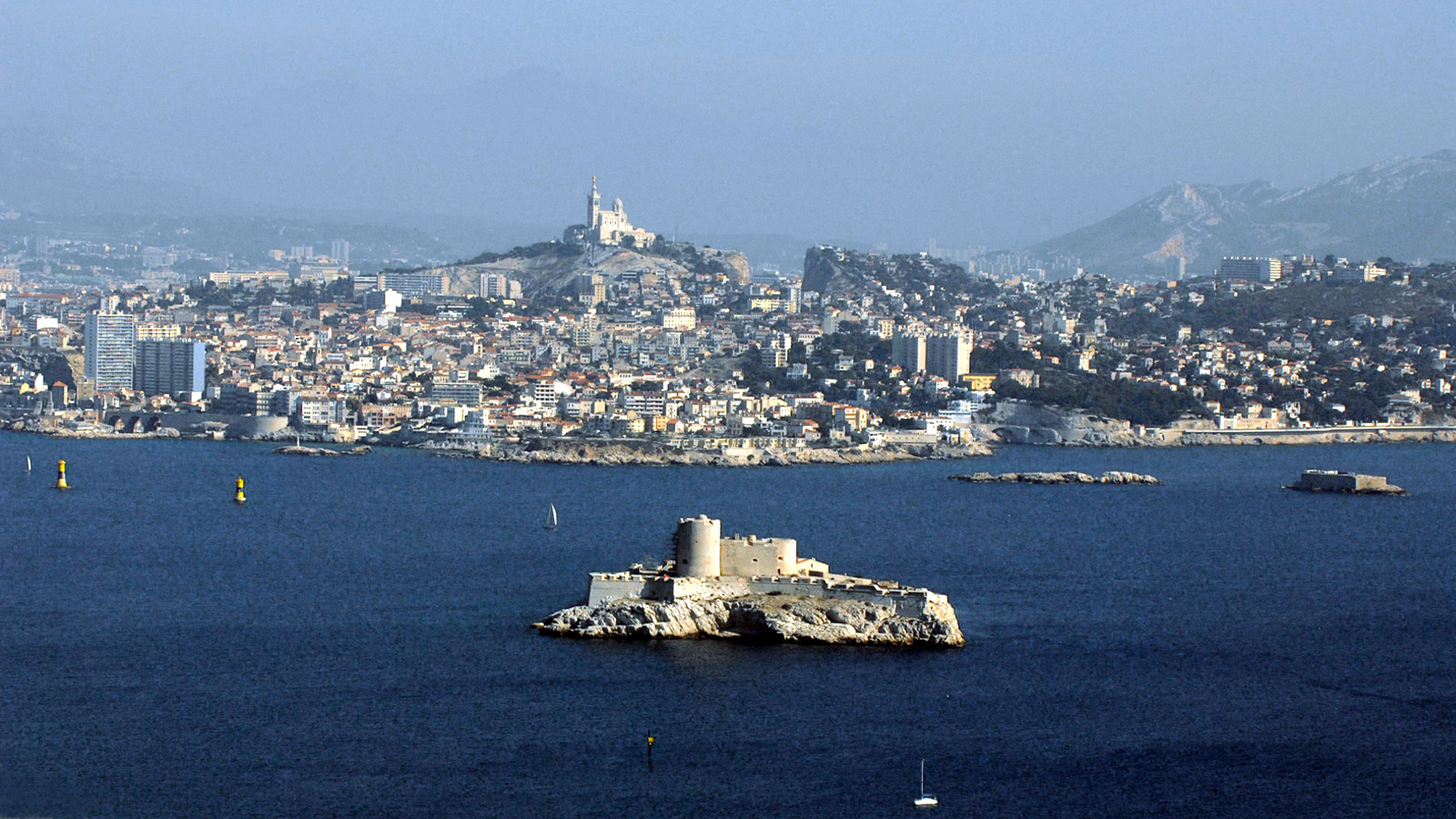
Above; from the Do 24 pilot's album, a view snapped while overflying Marseille, with the city's Vieux Port (left) and basilica Notre Dame de la Garde on the hilltop to the right of the picture. Note the transporter bridge visible at the entrance to the Vieux Port, still intact here but blown up by the retreating Germans on 22 August 1944. Seenotstaffel 3 was based on the lake at Berre (next to Marseille) in early 1944. Berre was also home to the six-engine transoceanic SE 200 flying boat seen below alongside a Do 24


Oliver Rogge's latest Ebay sales are here

Thursday, 26 June 2014
Luftwaffe Seaplanes Vol 3 - Roba, Neulen, Ledet - Seenotstaffeln, Breguet 521 Bizerte, He 115

Volume 3 of the Lela Presse 'Luftwaffe Seaplanes' series has arrived! 410 A-4 glossy pages, around 800 photos and 50 Thierry Dekker artworks! That's well over 1,300 pages for the three volumes! This volume deals chiefly with the Dornier Do 24 (around 200 pages) and Beute types such as the Breguet Bizerte..


French text, but these volumes represent the most in-depth treatment of the subject in any language. And each volume does contain extended photo captions in English and translated text extracts by this blog author. I feel very proud to have been involved with these books, thanks to the team at LeLa Presse and especially to Jean-Louis Roba, who, when I suggested that Hannibal Gude, Staffelkapitän 8. Seenot, could perhaps be profiled in the book, dug out the following rare image for inclusion....

Hptm Hannibal Gude was born in Breslau in 1913 and in 1932 volunteered for the German Navy. When the Nazis came to power he trained as a seaplane pilot. At the start of the war he served in north Germany before taking up a desk position at the German Air Ministry (RLM) for one year. Promoted to the rank of Hptm in June 1942 he was posted to Romania to take up a front command as Kapitän of 8. Seenot operating over the Black Sea;
“ I was surprised at the lack of personnel in this unit which seemed to function in a very adhoc fashion and only had nine aircraft on strength - we were so lacking in airmen that I often flew most sorties, although only at the controls of the He 59 – having spent a year at the RLM I had received no training on the much more modern Do 24 and thus flew on this type only as observer.”
On 01 January 1943 Gude was promoted to Maj. In February 1943 he was appointed Staka 2. Seetransportstaffel Sewastopol (to 03.43).The two Seetransportstaffeln were adhoc transport units set up during February 1943 to fly resupply sorties to the encircled 17. Armee in the Kuban. The aircraft often returned to Sevastopol fully loaded with wounded soldiers. Encounters with Soviet fighters or MBR seaplanes were fortunately rare and no losses in combat were recorded.
Elsewhere, this selection of seaplanes and French types currently on offer on ebay.de from Manuel Rauh (engelbubu photos) here

Above; good view of the rather ungainly "nose" of a Breguet 521 Bizerte - a feature which proved very useful for observation tasks while the aircraft was in flight. Note the defensive position to the right of the cockpit. The machine is no longer wearing its French livery but has yet to receive Luftwaffe markings. a task that was hurriedly accomplished as the Germans had an urgent requirement for air-sea rescue seaplanes along the French Atlantic and Channel coastlines. Bizerte seaplanes were sold to the Germans by the Vichy government during the summer of 1940.
The first loss of a Bizerte was SG+FM (N° 11), launched on 16 November 1940 to look for the crew of a KG 100 He 111 and intercepted and shot down by a N° 236 (Coastal Command) Squadron Blenheim.
As of April 1944 the Luftwaffe Seenot Staffeln had just five Bizertes on strength, two with 3. Seenot at Berre (N° 20 and ??) and three with 1. Seenotstaffel (N° 3, 4 and 36) at Biscarosse. With the Allied landings in Provence during August 1944, both Staffeln were ordered back to Germany. At least one of these machines (N° 4) remained in France to be incorporated back into the French naval air arm with 30S post-war.
Unfortunately I have no info on the locations in the images below. Bizerte flying boats were based in Hourtin (Atlantic coast, north of Bordeaux) and Brest among others. It was in Hourtin that Leutnante Klingspor and Unterhorst first arrived on 30 July 1940 with two crews to take possession of Bizertes N° 11 and 34 abandoned on 18 June. Both machines were repainted in German colours and flew into Lanvéoc-Poulmic (Brest, southern Brittany) on 7 August 1940


Below; Potez M. 36 (?) touring plane in Luftwaffe markings...

Monday, 13 May 2013
more Luftwaffe Seaplanes - Dornier Do 24 of 6. Seenotstaffel, Dornier Do 18 and Bv 138


Do 24 of 6. Seenotstaffel in the harbour at Patras following a collision with a fishing boat. Note the damaged nose. Picture is dated 1942.


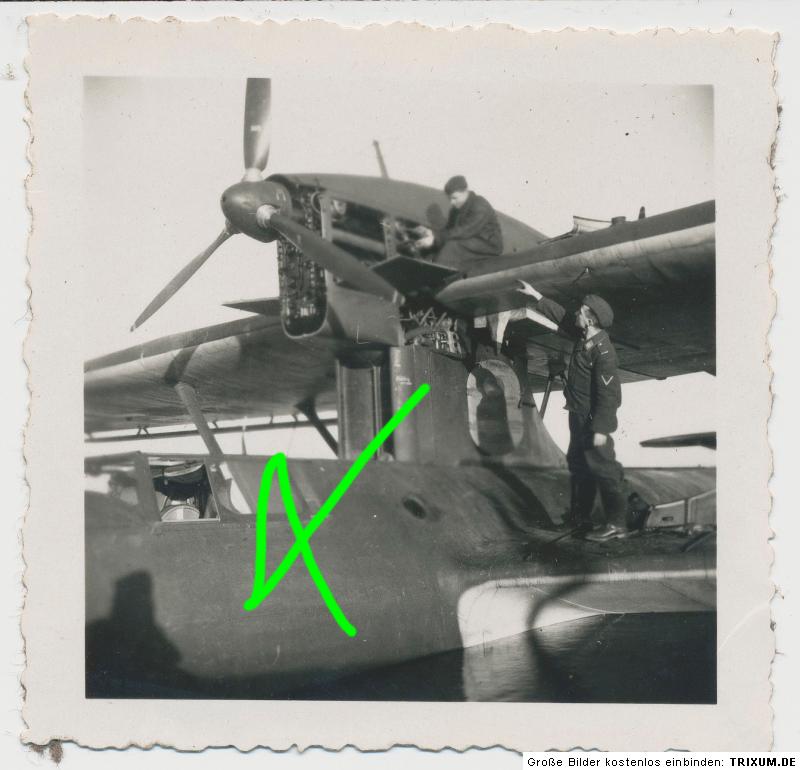

http://www.ebay.de/itm/Foto-Flugzeug-Airplane-Dornier-Do-18-Pilot-Mechaniker-9017-/370811518092?pt=Militaria&hash=item565616bc8c
Subscribe to:
Posts (Atom)