Showing posts with label LG 1. Show all posts

Saturday, 7 December 2024

Maj. Karl-Heinz Schomann, Gruppenkommandeur I./LG 1 - PK Berichter Hans Gross


 Seen here supervising the mechanics working on his Ju 88 A-4, Maj. Karl-Heinz Schomann was a 'veteran' of the campaign in the West (May-June 1940). As Oblt. in 9./LG 1 he was WIA in combat with Spitfires during May 1940. LG 1 carved out its reputation in the Med and North Africa. Operating out of Heraklion, Crete, in support of Rommel's DAK and flying convoy escort as well as night bombing raids, Schomann as Staka 5./LG 1 was again injured on 8 December 1942 off the coast of Libya, his Ju 88 A-4 attacked by an RAF fighter. Schomann replaced Helbig assuming the role of 'acting' Kommandeur of I./LG 1 in January 1943 before being named as Helbig's replacement and promoted to Major in March 1943. He was awarded the RK in October 1943 for his leadership having claimed 29000 GRT of shipping sunk. During July 1944 Schomann was appointed Ia with the General der Kampfflieger and concurrently Inspekteur der Erganzungsgruppen der Kampfgeschwader. In 1945 he held a staff position with the General der Kampfflieger. Schomann survived the war having flown around 265 combat sorties. He passed in August 2006.


The ECPA-D caption gives the location as Greece during April 1944. LG 1 had previously operated from Heraklion between 14 November 1942 and 2 April 1943 and Eleusis between 2 April 1943 and 11 June 1943. Schomann is clearly wearing his RK which was not awarded until late October 1943. Note the Wellenmuster finish applied to the lower surfaces of the Ju 88, presumably in an attempt to 'tone down' the clear lower surfaces for night missions..


Photos by PK Bildberichter Hans Gross, below, wearing his EK 1 awarded in mid-1942. Gross was killed in January 1945 in Belgium - 80 years ago. His images - more than 1000 of them - are thus freely available on the ECPA-D website. Unfortunately 95% of them are landscapes of Greek islands and scenes of local inhabitants in North Africa including camels, which is particularly disappointing as Gross was author of the war-time " Mein Freund Marseille". Post war his various reports were collected together in a book entitled "Als Kriegsberichter im Einsatz"..


Thursday, 30 November 2023

Stuka crews of 10.(St)/LG 1 relax ahead of the attack in the West


A Stuka crew from 10.(St)/LG 1 relaxing by their machine just prior to the Westfeldzug, the campaign in the West. The Ju 87s of IV./LG 1 departed their field near Cologne on 19 May 1940 and headed for Belgium. Their new base was a field strip near Hargimont (Marche). This 10. Staffel machine was Ju 87 B-1 'L1+CU'.


Just one of the many excellent photos published in the latest BA (issue 104) from Lela Presse " Stuka dans la Blitzkrieg " Part II (the  attack in the West. Part I covered Poland and Scandinavia..). BATAILLES AÉRIENNES is the leading French-language quarterly from Lela Presse, in continuous publication since 1997. Features rare first person accounts, rarely seen photos and superlative artwork from Eric Schwartz, still only 13 euros (100 pages, 200 illustrations, 10-15 artworks). Available here

" Here is the second part of our study dedicated to the terrifying weapon -in its day- that was the Stuka. After a successful trial in Poland, the Ju 87 was to prove its worth on the battlefield in the West. As we know, it was a great success. And the Allied anti-aircraft defences of the time were not the equivalent of the German Flak; not to mention the Allied fighters who, although overwhelmed by the scale of the Luftwaffe attacks, were able to score a few successes against the Stuka, successes which already revealed the vulnerability of the dive-bomber. So, no, the Stuka was not a miracle weapon; it was simply a question of making good use of a weapon in a rather favorable context. Mention is often made of the Stuka's siren, which terrorized the population and Allied troops. Certainly, this was the case during certain attacks, and this is essentially what was remembered and, above all, peddled. Nevertheless, numerous photographs show that personnel were happy to get rid of this equipment... whose effectiveness could not have been as radical as later reported...

To this day, the Stuka remains a legendary weapon, inseparable from the 'Blitzkrieg' waged by the 3rd Reich. The author's account shows us that the reality needs to be nuanced, as the losses suffered by Stuka units were not negligible; nor were those suffered by other Luftwaffe units, even in a context of near-total victory..."

Saturday, 3 September 2022

Mission to Valetta, April 12, 1942 - 4./LG 1


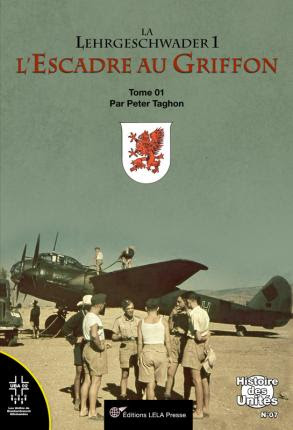
Extracted from the book: Die Geschichte des Lehrgeschwaders 1 (vol I) by Peter Taghon. A French edition is also published by Lela Presse and both volumes are still available from their web site at a very affordable price, see link below.

(The following account has been prepared from the original German-language edition and, probably for reasons of space, does not appear in the French edition. Translation by FalkeEins. Note this is NOT the translation that was posted on a certain FB page - that had one or two 'problems'!).

Mission to Valetta, April 12, 1942 - 4./LG 1

In accordance with II. Fliegerkorps orders, II./LG 1 were to attack at 10:30 and 16:00 those remaining harbour facilities - 19, 33 and 34 -  that had not been destroyed in the port area of Malta's capital. That morning several II.Gruppe crews also bombed Ta Kali and Luqa airfields, accounting for several Hurricanes and also a few Wellingtons destroyed. During the raid on Valetta, 4. Staffel lost Ofw. Waldemar Kremin’s  Ju 88 A-4, 'L1 + GM', which was hit by flak and crashed. The crew remains missing. Only the body of the BO (observer), Uffz. Karl-Schleiermacher, was recovered. Uffz. Walter Malzahn recalled;


"..We were flying in Kette formation. Oblt. Sy was leading and flying just off to our right was Ofw. Kremin. Approaching Valetta harbour the welcome we received was extremely unpleasant. There was no longer any blocking fire or fire directed by sighting or listening devices. This was targeted and very accurate. It really was a devilish surprise.

An accurate drop of our ordnance in the teeth of this level of defensive fire would be practically impossible. There were shells bursting right in front of us, close around the cockpit. Even above the roar of the engines you could hear the sharp, hard crash of shells exploding. It stank of sulphur.

I had my hand on the cabin roof escape hatch and would've jumped if I'd heard any clattering of shell splinters. But there were none. Even today I don't know why we weren't hit. Perhaps the shells had not been constructed to fragment or shatter?"

"Oblt. Sy flew the usual defensive manoeuvres so as not to give the heavy flak an easy target to aim at. I was both shocked and amazed to see that Ofw. Kremin stubbornly held his course straight and level. This lasted a matter of seconds - then he took a direct hit. His Ju was thrown up on to its port wing tip and appeared to veer in a kind of knife-edge slice towards our tail. I screamed at Sy to take evasive action so that Kremin's stricken Ju didn't take us down with him.. The manoeuvre was successful, but it was a very close call.

Kremin's Ju slid close by our tailplane and went straight down, a thick plume of black smoke like a comet in its wake. I was able to follow the trail almost to the point of impact. It was a spine-chilling scenario.  A thought flashed through my mind -  " that is how it will end for you too!"

" Despite this downing there was no let up from the anti-aircraft fire. I yelled: "Flakwaltzer!" Sy reacted immediately and let his Ju dance, almost aerobatically.  The main thing was the teamwork with Oblt. Sy had saved our lives. Once again we made it home without a scratch...."

 At 17:00 the Gruppe launched another raid on Malta. When the formation found itself over the target at 18:00, the Fliegerkorps changed the orders: the remaining targets 19, 28, 29 and 32 were to be bombed. And so it was that the crew of Oblt.-Erwin Sy attacked a food storage depot in Valetta. Oblt. Eilert Rogge's crew bombed a gas storage tank. The mission ended at around 18:40..


More on Peter Taghon's superlative two-volume history of Lehrgeschwader 1 including pdf extracts from both volumes at the French publisher's web site here


A selection of Ju 88s in the Med from the imagesdefensegouv.fr searchable database, (ECPA-D on-line photo archive) where these images are already on-line, in low-res and can be down-loaded for 'personal' use which means effectively they are 'public domain'. Reproduction here would probably be considered as 'educational' and fulfill 'fair-use' criteria. 


II./LG 1 Ju 88s in Greece (Crete)


Below; at Kastelli airfield, a Junkers Ju-88 D of Aufklärungsgruppe 123  has had its fuel tank removed for maintenance and/or repair.


I./LG 1 Ju 88 probably on Crete - click to view full screen


Tuesday, 23 June 2020

Lehrgeschwader 1 by Peter Taghon, Lela Presse - new Luftwaffe books


The second part of  Peter Taghon's Lehrgeschwader 1 history is published by Lela Presse in French.


Deployed in the Mediterranean in early 1941 against the British, LG 1 had very quickly gained the respect of its opponents (whether Navy or Army), having earned during these bloody battles the formidable nickname of 'Helbig's flyers' (after one of its best officers - see below). But, in September 1942, III./LG 1 was 'temporarily' assigned to the USSR and detached from the rest of the Geschwader, re-designated III./KG 6. I./KG 55, also operating the Ju 88 at the time, became the new III./LG 1. While this Gruppe was disbanded in May 1944, I. and II/LG 1 flew their missions until the end of the war, leaving Italy to be deployed over Normandy at the time of the 'invasion' in June 1944 and then over the Reich both in the West (Battle of the Bulge) and in the East (facing the Soviet steamroller). The remnants of LG 1 were not de facto dissolved until the beginning of May 1945. Throughout this latter period of the war, the Geschwader flew mainly on various variants of the Ju 88 (A-5, A-4, A-14, S-3). While other Kampfgeschwader were equipped with more modern aircraft (Ju 188 or Do 217), LG 1 fought to the end on machines that could be considered outdated. And while the other KGs were disbanded or switched to fighters, Lehrgeschwader 1 was one of the very few Luftwaffe units to make it through the six years or so of the war as a pure bombing unit.


Posted by Kevin Huckfield on TOCH;


  "...Volume 2 of the LG-1 book has just arrived and it is just as good as the first volume and about one and a half times the size in terms of pages. Features some 600 photos over 288 pages and 25 artworks by Thierry Dekker. The page quality is very good allowing for good images and the book is packed with narrative, photos and paperwork of all kinds, more so than the original German language versions. It also includes Annexes for such things as LG-1 Ritterkreuzträger, LG-1 related Werknummern, personnel etc...."


A ten-page PDF extract from the book is available from the publisher's website here

The first volume of this two-part unit history is reviewed elsewhere on this blog here


Two photos offered on ebay taken on July 5, 1941, on the airfield at Eleusis, on the occasion of the award of the Ritterkreuz to Hptm. Gerhard Kollewe Gruppenkommandeur II./LG 1 (below, on the right) presented by the Kommodore Friedrich-Karl Knust, on the left in the image below. Similar ceremonies were held on 30 August 1941 for the presentation of the Ritterkreuz to Ofw. Franz Schlund (radio operator in Helbig's crew) and 8 September 1941 when the Staka 8./LG 1 Hptm. Hermann Hogeback received his RK.


from 'Helbig flyers - I./LG 1 im Mittelmeer und Afrika' by Gerd Stamp


"....The year 1941 was drawing to a close. If it had been too hot in summer, it was now too cold. We stood and froze in front of our accommodation building, which with its squarish shape was reminiscent of a cigar box. The personnel of the entire Gruppe stood in an open square: the Stab, first, second and third Staffeln, the technical company and the intelligence section.. Expectant faces and frozen fingers marked the spot. I was shivering unashamedly. The cutting northwest wind, which came down from the Parnassus, did not make for pleasant thoughts. Suddenly commands, and an announcement - the Kommodore was to address us. The wind snatched the words from his mouth. I stood opposite and heard only torn fragments:

" . . . a few days ago . . . the old commander v e r a b s c h i e d e t . . took his leave. Today I am introducing the new K o m a n n- deur . . .an old member of the Geschwader . . . look back on great achievements . . . Expect the same in the future .."

 My thoughts started to wander. Hopefully it wouldn't be long now. Then, more commands barked out, car doors slamming and he was gone. Then someone else stood in our midst. Again I heard only snatches of the words;

" . . . Take over the group . . . add more to the successes achieved . . . I won't ask anyone to do anything that I wouldn't do myself!"

But now it was really too cold for me. I felt Hoffmann and "Fähnlein" (Gerd Brenner) freezing next to me, and with these thoughts the command to stand down came.

So that was Joachim Helbig.(below, centre)

I still had a fleeting memory of him from France when he was once in our command post. A thick fur waistcoat, impossibly crumpled cap that kept his smooth slick-backed hair in check, a pair of mischievous eyes that constantly flitted to and fro. . . . and always some apt remark on the tip of his tongue. At first he was called "Capitaine Fit". The name came from the "Pelikan", a bar in Orleans, which even at the mention of its name evoked longing memories in all its former patrons..."


Monday, 18 February 2019

Junkers Ju 88 Aces - a selection of Ju 88 'ace' photos - Helbig, Hogeback, Storp, Fischer , Schweickhardt


Hptm. Erwin Fischer (right of the sign) with Glas Sekt on the occasion of the 3000th Feindflug  of Aufklärungsgruppe 121. Note the white swan emblem of the unit, Ju 88 D coded 7A + NH


Despite having published at least three volumes on Junkers Ju 88 Kampfgeschwader in their 'Combat Units' series, Osprey editor Tony Holmes decided we needed at least one Ju 88 volume in the 'Aces' series. However on the evidence of this volume I would say to him that we probably need a few more of these as well. This is an excellent volume on the Junkers Ju 88, presenting an overview of the aircraft and the men who flew it in each of the roles it undertook; bomber, intruder, night-fighter, long-range day fighter and reconnaissance. Many of the more 'famous' Ju 88 pilots are covered such as Baumbach, Helbig, Herrmann and Heinz Rökker along with some of the lesser known. The profiles are some of the best I have seen in an Osprey book and the content highly readable and informative. However, it is not strictly an "aces" volume as it does not specifically look at those who claimed 5 or more kills whilst flying the Ju 88. If you are thinking of buying it because of the title, you may perhaps be disappointed. That being said, if you have any interest in the type and the exploits of its crews then buy it - it is a taster or as Robert himself referred to it " a toe-dipper". To cover all noteworthy Ju 88 "ace crews", in all the roles in which the aircraft undertook, would take several similar sized volumes. For example, Hermann Hogeback is only mentioned in a couple of photo captions and he would certainly qualify as the Ju 88 bomber "aces of aces" (with 500+ operational sorties and being one of only three Ju 88 pilots to receive the Knights Cross with Swords). Erwin Fischer is the only reconnaissance pilot to receive the Knights Cross with Oak Leaves (as far as I am aware) and he is not even mentioned in the text...

Above; Ju 88 A-4 WNr. 142338 coded 'F1+GS' flown by the Gruppenkommandeur III./KG 76 Hptm. Heinrich Schweickhardt. The coat of arms of the city of Heidelberg recalls Schweickhardt's birth place. He was flying this aircraft when he went missing during a transfer flight on 9 January 1943.

Hptm. Heinrich Schweickhardt (1914-1943) awarded the RK as Staffelkapitän 8./Kampfgeschwader 76, (Ritterkreuz 04.02.1942, Eichenlaub (138) 30.10.1942)

Appointed Kommandeur III./KG 76 in March 1942 Schweickhardt and his crew went missing during a flight from Catania to Athen-Tatoi on 9 January 1943 after a radio message from about noon saying he was having engine trouble. This was after combat about 100 km west of Zakynthos or Zante. The aircraft was a Ju 88 A-4 WNr. 142338 coded 'F1+GS'. Posthumously promoted to
Major, credited with around 400 missions.


Below; Junkers Ju 88 A-6 1./(F)123 (4U+SH) after a recon mission flown by Ofw. Bach, Perugia Italy. Chased by Allied fighters the pilot flew so low over the sea that the propellers struck the water and shattered. Fortunately the wooden propellers broke evenly which allowed the engines to keep running and Bach made it back to his base in Perugia at a some what reduced speed..


Two views of I./KG 77 machines. Note the white winter finish applied even to the prop blades in the lower picture


below; torpedo-carrying Ju 88 of I./KG 26 taking off from Bardufoss in March 1945 to attack a Murmansk convoy. Note the Schiffssuchradar - shipping search radar FuG 200 Hohentwiel. To the right of picture Oberst Ernst Kühl is seen saluting the departing aircraft. 

Chris Goss has a different caption in his Frontline " Junkers Ju 88 - the twilight years"  which reads as follows;   A Ju 88 of I./KG 26 taxying out at Bardufoss to attack an Allied convoy, RA 64, on 20 February 1945. In the crew is Oberst Ernst Kühl who had recently been given command of a Fliegerdivision based in Narvik. He was holder of the Ritterkreuz mit Eichenlaub and had flown 315 combat missions, most of them with KG 55.


Below; interesting cockpit views and a rare portrait of Werner Baumbach at Munich Riem during 1942..


Junkers Ju 88s of KG 26 being readied for sorties out over the Med from Sicily. Note the twin under-slung torpedoes in the first image below, each weighing approx 750 kg, of which 200 kg was explosive. To launch the weapons the Ju 88 pilot had to maintain a speed of 180 km/h at an altitude of forty metres. In theory the torpedo could be dropped up to two kilometres from the target but in practise a more realistic range was barely 800 metres. However at distances such as these the Ju 88  pilots were very much aware they would likely find themselves in a maelstrom of defensive fire.


On 22 December 1942 Ju-88s from III.Gruppe KG 26 torpedoed and damaged the British troopship Cameronia. Strikes were made all along the African coast. Allied air attacks cost the unit four aircraft on 8 February 1943 when the unit's base at Cagliari-Elmas, Sardinia was bombed. In July 1943 the unit also contested "Operation_Husky", the Allied invasion of Sicily. On 12 August the unit struck at Allied shipping in the western Mediterranean losing 10 machines for little result.

Below; Kommandeur I./LG 1 Hptm. Joachim Helbig seen in Catania, Sicily during 1941. He was awarded the Eichenlaub during January 1942 after some 200 sorties..


Deployed early on in the Mediterranean, LG 1 would soon prove to be one of the most formidable and feared opponents of the Royal Navy. Under the orders of Kommandeur Helbig, the "Helbig flyers" of I./LG 1 as they were dubbed were responsible for sending many Allied ships to the bottom. Notable actions included the sinking of three large transport vessels Clan Campbell, Clan Chattan and Rowallan Castle from the convoy MW 9, during attacks on 13–14 February 1941. On 22 May 1941 during the Battle for Crete, LG 1 Ju 88 pilot Gerd Brenner finished off the RN cruiser HMS Fiji with heavy loss of life. III./LG 1 also damaged the Australian destroyer Waterhen on 9 July 1941, sinking it on 11 July. The Geschwader supported the Afrika Korps effectively in Libya and Egypt until 1942. Bombing raids were made on the Suez Canal, Cairo during this time. On 11/12 May 1942 I.(K)/LG 1 again led by Helbig were responsible for sinking HMS Kipling, HMS Jackal and HMS Lively in the Gulf of Sollum. Helbig below on the right..


Below; Iro Ilk Staffelkapitän of 1./LG 1 during 1943 and bomber ace at the controls of his Ju 88. Both Ilk and his close friend in LG 1 Gerd Stamp were awarded the Knight's Cross with I./LG 1 for audacious attacks on British shipping in the Med, before going on to fly single engine night fighters with the wilde Sau. Ilk was shot down and killed by Spitfires as Gruppenkommandeur III./JG 300 on 25 September 1944. Post-war Stamp achieved high rank in NATO and married Ilk's widow.


Having carried out intruder attacks over Britain with some success for almost a year, the Ju 88 Cs of I./ NJG 2 were transferred to the Mediterranean and the western desert of North Africa in late 1941.  Ju 88 C-4 " R4+EL" (3./ NJG 2) came to grief during the transfer flight to Sicily and made an emergency landing near Naples. Crash landed by Flugzeugführer Fw Robert Lüddecke (front) on 22 November 1941 at Capodichino-Naples. Lüddecke had returned three night victories - Nachtluftsiege - at the time of the incident.


Below; seen far left Ritterkreuzträger Hptm. Hermann Hogeback, Kommandeur III./LG 1 on the occasion of a commemoration of the 5000th sortie flown by the Gruppe, Stalino, September 1942.

Three bomber aces of KG 6 with around 1,000 sorties between them, Hptm. Rudolf Puchinger, Staka 8./KG 6, Kommodore Walter Storp and Kommandeur III./KG 6 Hermann Hogeback.


Partial view of a formation of V./KG 40 Ju 88 C-6 heavy fighters seen over south-western France during early 1943. Nearest to the camera is Ju 88 C-6 "F8+RY" with Oblt. Kurt Necesany at the controls, while behind this aircraft is "F8+NY"


Diving Eagle of KG 30 seen on Herrmann's Ju 88 A-4. Early in World War II, Herrmann flew bombing missions in the invasion of Poland and the Norwegian campaign. By 1940 he was Staffelkapitän 7./KG 4 re-designated 7./KG 30 at the end of the Battle of Britain. In February 1941 his Gruppe was transferred to Sicily, from where it attacked Malta then fought in the Battle of Greece. In one attack Herrmann sank the ammunition ship Clan Fraser in the port of Piraeus. The explosion sank 11 ships and made the Greek port unusable for many months. He was appointed Kommandeur III./KG 30 and flew missions against Russia. He was a controversial figure in 'right-wing' circles post-war.


"..Herrmann was one of the most deadly Luftwaffe pilots of the Second World War and one of its most innovative air tacticians; a committed Nazi determined to fight to the end, he even formed a special unit of fighter pilots whose task was to ram Allied bombers out of the air..."

 ..from his obituary published by the British 'Daily Telegraph' in 2010. Read it in full here

The above is intended to serve as an introduction to the two Ju 88 photo volumes compiled by Chris Goss in Frontline's 'Air War Archive' series..while Volume one focused on the Battle of France and the Battle of Britain, Volume two, "the Twilight years- Biscay to the Fall of Germany" covers the activities of Ju 88 Gruppen in Russia and the Mediterranean and looks at reconnaissance and torpedo operations. Heavy fighters also receive a chapter  - 'Battle over the Bay' covers the little-known ZG 1 - and there is a small section at the end on the Misteln..