Saturday, 10 October 2026
2000. Feindflug einer Fernaufklärerstaffel - Werner Breese 5.(F)/AufklGr. 122
Tuesday, 9 December 2025
Werftzug. mot 3/20 Ju 88s of KG 76 - archive image scan #50
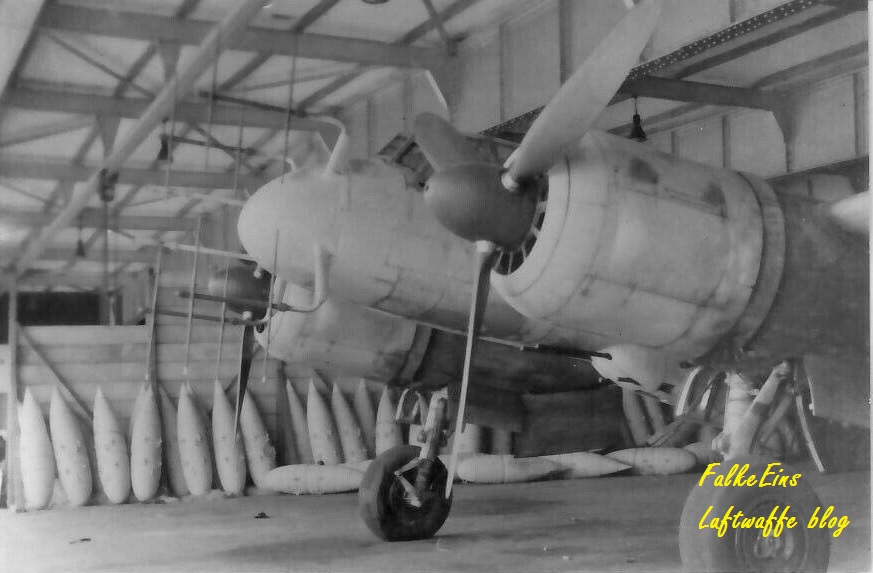
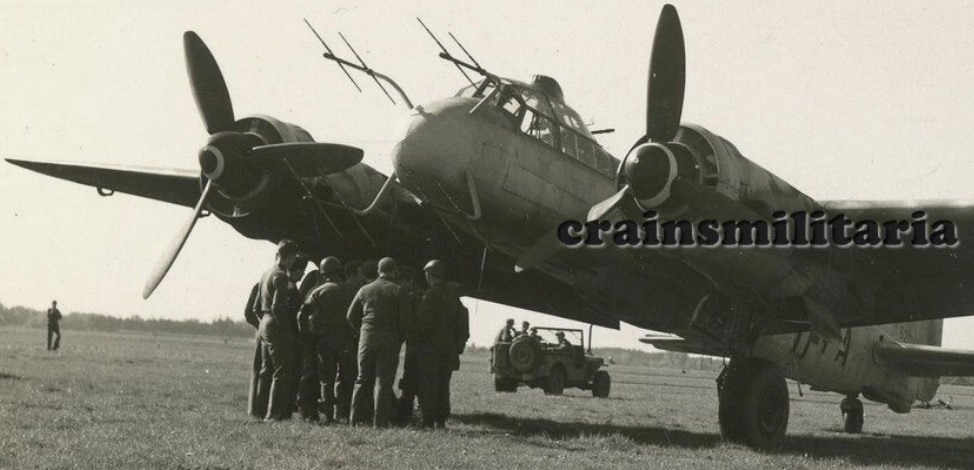
#50 in our ongoing series of rare images scanned for this blog from various 'professional' and 'personal' collections. A selection of these KG 76 Ju 88s recently appeared for sale on ebay.de but obviously the seller didn't post them in this quality. Professionally photographed, they depict the activities of a motorised Werftzug on an Eastern Front airfield (Kursk) during the summer of 1942. The Werftzug was an organizational unit, specifically a technical or maintenance platoon/section, typically attached at the Gruppe level. Its primary function was to provide essential maintenance, technical support, and repair services for the aircraft within its assigned Gruppe, which usually consisted of approximately 30-40 aircraft. The personnel in the Werftzug included ground crew, mechanics, and other technical specialists responsible for keeping the aircraft operational. The Werftzug was an integral part of the operational structure of a flying unit, ensuring that the aircraft were maintained and ready for combat missions. The term Zug translates to "platoon," indicating a relatively small but vital body of specialist personnel and equipment. Note the 'F1' code on the Ju 88 (KG 76) and the 'C' heavy fighter with the 'fake' over-painted nose intended to 'disguise' the heavy forward firing armament.
Sunday, 23 February 2025
Kampfgeschwader 54 Volume II by Peter Taghon (Lela Presse 28/02/25)
Another imminent publishing event for Luftwaffe enthusiasts - volume II of Peter Taghon's huge history of KG 54 is due at the end of next week. From the publisher's blurb; (adapted and translated by this blogger)
Below; from volume II, a 6./KG 54 Ju 88 in Bergamo, Italy
Hello Peter, many of us are no doubt eagerly awaiting Vol II of your KG 54 book. Can I please ask you a couple of questions for my blog report?
Hello Neil,
It’s not easy to say exactly how much time I’ve spent researching KG 54. It all started for me in the mid-1980s with my research on Luftwaffe operations during the Westfeldzug. Through this, I made a lot of contacts with pilots and crew members of the Lehrgeschwader. Some of them had extensive documentation and had also been active in Belgium in 1944. It didn’t take much encouragement from them for me to start writing the history of their Geschwader. That KG 6 would follow was only natural.
Once I had finished working on KG 6, I looked for a new subject. During my research on the Westfeldzug, I had already made quite a few contacts with crew members and pilots of KG 54. I also had extensive communication with Sigmund Radtke from the Traditionsverband KG 54. However, most of my contacts had only been active during the western campaign or had been shot down over England as early as 1940-41. A few went on to have rather impressive careers. So, I already had a decent amount of documentation on KG 54.
By coincidence, the archive of Sigmund Radtke, the author of the book on KG 54, had been passed on to my good friend Ulf Balke. Part of it had already been given to Morten Jessen, but both Ulf and Morten were willing to make the archive available to me. That’s when I discovered that Radtke had far more information than he had used in his book. In addition, I found a lot of supplementary material in the Bundesarchiv.
I got even luckier—through my contacts at the AMC, I was able to access their archive as well. They turned out to have a large collection of photographs, some interesting logbooks, and, most importantly, the diary of Hauptmann von Brunn. He had been very active in the final years of the war, and his notes proved to be of great value for that period.
How long I spent researching/writing is hard to say. A large part of it was done in the 1980-90s (mainly focusing on 1940-41), and after that, I worked on it in small steps until I finally decided to tackle the chronicle in earnest, which led me to resume intensive research. That was during the peak of the COVID period. Writing itself took about 3 to 4 years, partly alongside the research. I did this partly in my free time while I was still working, and then for about a year and a half as a retiree—spending a considerable number of days working on it full-time.
Peter, there were plenty of great images in volume I and I've already been fortunate enough to have seen some of the highlights from volume II. Do you have any particular favourites?
Which photos interest or appeal to me the most? Most readers will undoubtedly be very interested in the photos of the Me 262. There are so many photos that I find fascinating, but the ones I have the strongest emotional connection with are the photos that started it all. For example, during my research on the Westfeldzug, I came across a couple of photos in an infantryman’s album showing the crashed Heinkel 111 of Hauptmann Willers in Scheldewindeke. Through Sigmund Radtke, I got in touch with Willers himself. He was very eager to visit his crash site again. That was a truly special experience, and his information proved very valuable for the chronicle.
Even more significant was a photo of a He 111 that had crashed in Oudekapelle—also a KG 54 aircraft. I had no idea who the crew could be, but one of the infantrymen had taken a clear photo of the pilot. I sent the photo to Sigmund Radtke, and he immediately recognized him as the future Ritterkreuzträger Ernst Petzold. I was able to get in touch with him, sent him the photos, and he turned out to be very interested. He immediately invited me over, and through him, I gained an incredibly interesting insight into his long career within the Geschwader. So, if you ask me which photos appeal to me the most, then yes—it would have to be the photos of Willers and Petzold.
Peter, thank you for helping to put together a nice presentation for the Luftwaffe blog and thank you for allowing me to to translate some extracts of your KG 54 history into English (coming soon)
No problem! Many thanks for the publicity! I know Lela Presse appreciate it. Can I conclude by saying that I’m very lucky that Michel at LeLa Presse took the risk of publishing two such voluminous books. Cheers!
Wednesday, 19 February 2025
Oblt Albrecht Bellstedt - a novice Fw 190 pilot in III./JG 2 ..and an ace in V./KG 40
But Bellstedt was no novice aviator - in fact he was a leading fighter ace on the Ju 88 C-6. He had made his ‘name’ with V./KG 40 and during the course of 1943 had claimed around 10 aircraft downed over the Bay of Biscay. His most ‘notorious’ victory (participation) was returned on 1 June 1943 - a KLM DC-3 flying civilians between Lisbon and Whitchurch, Bristol in England. Seventeen passengers including women and children and the famous American film star Leslie Howard were killed. The Ju 88 crews were apparently not aware this was a regular 'civilian' service - it would perhaps have been a better option to escort the DC-3 into a French airfield.
Bellstedt’s 14./KG 40 was re-designated I./ZG 1 in October 1943. The ace flew his last sortie over the Bay of Biscay on 16 May 1944. With the Allied landings in Normandy on 6 June I./ZG 1 along with III./ZG 1 was hastily deployed to fly strafing attacks against the beaches, for which neither the aircraft nor the crews were prepared. Losses were heavy. In the space of just four days, 33 ZG 1 airmen were killed, three captured and five wounded. Among those killed were Oblt. Ulrich Hansen (Gruppenadjutant III./ZG 1), Lt. Kurt Löw (Staffelführer 7./ZG 1) and Lt. Knut Gmelin (Staffelführer 1./ZG 1). Bellstedt flew his fourth and last mission over Normandy on 10 June 1944. He was fortunate that for the rest of the month I./ZG 1 was withdrawn from the front and Bellstedt recorded seven so-called Bandbekämpfung or ‘anti-partisan’ missions against the Resistance in southern France. His last flight of the month took place on 30 June 1944. It was his 116th Feindflug.
The date 5 August 1944 marked the end of I./ZG 1. With its disbandment,its members were posted to other units. Until then, Bellstedt had only flown the Ju 88 and was now sent to Königsberg to retrain on the Fw 190. On 17 September 1944 he began flying fighter missions as the Staffelkapitän of 9. / Jagdgeschwader 2. Mombeeck published a poor quality image of Bellstedt and his new Staffel in his JG 2 history (volume 6). It is presumed that he did not survive his third mission after clashing with US fighters. He may have fallen victim to the 365th or the 368th Fighter Group. His Fw 190 crashed in the Limburg-Montabaur area (north-west of Frankfurt). Still only 22 years old, he was buried in Neuwied. To paraphrase Chris Goss, his 'successes', just like those of many of his pilot comrades in V./KG 40, have mostly been forgotten.
Wednesday, 8 January 2025
NJG 2 nightfighters - ebay photo find #383
Above; a 2./NJG 2 Do 17 Z-7 at Gilze-Rijen in September 1940. Finish is all black with white spinner tips and the new Nachtjagd emblem on the nose. The infrared Spanner lamp appears to have been removed from the nose - or not yet fitted. Below; Ju 88 C-6 of 9./NJG 2 in the summer of 1942 at Gilze-Rijen. In the cockpit is Uffz. Günther Riemann, BM (flight engineer) in Ofw. Wilhelm Baier's crew.
Saturday, 7 December 2024
Maj. Karl-Heinz Schomann, Gruppenkommandeur I./LG 1 - PK Berichter Hans Gross
Seen here supervising the mechanics working on his Ju 88 A-4, Maj. Karl-Heinz Schomann was a 'veteran' of the campaign in the West (May-June 1940). As Oblt. in 9./LG 1 he was WIA in combat with Spitfires during May 1940. LG 1 carved out its reputation in the Med and North Africa. Operating out of Heraklion, Crete, in support of Rommel's DAK and flying convoy escort as well as night bombing raids, Schomann as Staka 5./LG 1 was again injured on 8 December 1942 off the coast of Libya, his Ju 88 A-4 attacked by an RAF fighter. Schomann replaced Helbig assuming the role of 'acting' Kommandeur of I./LG 1 in January 1943 before being named as Helbig's replacement and promoted to Major in March 1943. He was awarded the RK in October 1943 for his leadership having claimed 29000 GRT of shipping sunk. During July 1944 Schomann was appointed Ia with the General der Kampfflieger and concurrently Inspekteur der Erganzungsgruppen der Kampfgeschwader. In 1945 he held a staff position with the General der Kampfflieger. Schomann survived the war having flown around 265 combat sorties. He passed in August 2006.
The ECPA-D caption gives the location as Greece during April 1944. LG 1 had previously operated from Heraklion between 14 November 1942 and 2 April 1943 and Eleusis between 2 April 1943 and 11 June 1943. Schomann is clearly wearing his RK which was not awarded until late October 1943. Note the Wellenmuster finish applied to the lower surfaces of the Ju 88, presumably in an attempt to 'tone down' the clear lower surfaces for night missions..
Sunday, 29 September 2024
A modellers guide to the Ju 88 G-6 - John McIllmurray with David E. Brown
I just learnt that John McIllmurray's new e-book on the Ju 88 G-6 is available to purchase and download from KLP Publishing. So that's exactly what I've just done...While I'm not really a big fan of e-books I did purchase KLP's ebook on building the Revell 32nd scale Me 262 night fighter, which was very well done, and I knew that John and David's publication on the Ju 88 G-6 would be a 'must-buy'! Small disclaimer here - the Luftwaffe blog provided a big chunk of text for the 'Nachtschlachter' chapter of John and David's ebook. After all, what 'traditional' publisher in their right mind would produce a 1,031 page volume on a single Luftwaffe night fighter aircraft type in colour? (not to mention an additional 135 pages of losses, victory claims, plans and artworks in separate files..) And while I probably won't be building a 32nd scale G-6 anytime soon (..although I might feel inspired to try..), I will be studying the 'Crow Collection' Ju 88 G-6 photo archive and the loss and claims lists. And unlike some Ju 88 specialists, John is a draughtsman so his plans and artworks are likely to be spot on. Well done John and David ! And kudos to Del and Paul for making available what must be virtually the entirety of their extensive Ju 88 G-6 photo collections which are mostly scanned in very large, reproduced over the full (screen) page and 'zoomable'. And to Kevin for creating such a professional product, great to look at, easy to purchase and download, just click on the image to go straight to the KLP order page
Price by the way is AUD..not USD...
Also on this blog
Zerstörer- und Nachtjagdverbände book series by Paul Stipdonk & Michael Meyer
Building the Zvezda Ju 88 G-6 in 72nd with AIMS resin
Hasegawa Junkers Ju 88 G-6 in 72nd
Wednesday, 25 September 2024
Ju 88 G-series nightfighters - Dragon Ju 88 G-6 in 48th by VolkerR
The G-series were the first Ju 88 variants not based on the Ju 88 bomber ‘A’ fuselage. Re-designed and streamlined, the Ju 88 G-series had a new 'nose' and omitted the A-series' Bola ventral defensive gun position and featured a single ‘fish-eye’ armoured defensive weapon mount in the rear cockpit. It was fitted with the enlarged squared-off vertical fin/rudder tail unit/rear fuselage of the Ju 188 (making it slightly longer than the C-series) - this was an attempt to compensate for the increased torque of the BMW 801 D-2 radials which "due to manufacturing difficulties" (Becker, p75) did not rotate in opposing directions. The wing had the extended tips with enlarged ailerons and the tailplanes also had extended tips. As with the C-series there was no 'standard' armament fit, although the 'G' usually toted a quartet of cannon in a ventral weapons tray. See John McIllmurray's new 'Modellers guide to the Ju 88 G-6' for discussion and drawings on the location and variations in the G-6 of the 'Schräge Musik'. The G-6 used the Jumo 213 in-line engine with the characteristic raised supercharger intakes.
Above; Ju 88 G-1 with ventral Waffenbehälter (‘weapons gondola’) toting MG 151/20 cannon. Probably an NJG 2 machine, autumn 1944. Below; another NJG 2 Gustav, note Totenkopf death's head painted on the ventral gondola and open cockpit access hatch. Pilot is Lt. Johannes Strassner..
Below; one of the most modern nightfighters in the Luftwaffe's fleet was this G-6 'C9+AR' (WNr. 623211) used by 21-victory NJG 5 ace Hptm Werner Hopf to desert to Switzerland on the night of 30 April 1945 in a flight from Lübeck-Blankensee to Dübendorf. Note nose-mounted FuG 218 VR Neptun AI radar and associated tail-warning antenna on the enlarged 'Ju 188' vertical fin..
_.jpg)
_.jpg)
Above; the dark camo finish and bomb racks indicate the nature of Hopf's last sorties around Berlin - night ground attack sorties against Soviet troops. Also on board Hopf's aircraft were two fellow officers, two women and a child. Hopf was a former Staffelkapitän of 8./NJG 5 and had been awarded the DKiG..

Ju 88 G-6 coded 'B4+SA', W.Nr. 623363 of 4./NJG 3 (formerly Nachtjagdstaffel Norwegen) which landed at Bredakra, Sweden on May 8, 1945. The aircraft had been ordered to fly to Kurland from Trondheim and assist in the evacuation of encircled German forces but landed in Sweden. Crew was Hptm. Werner Hüschens and Ofw. Sebastian Falk. Dragon 48th build of 'B4+SA' by VolkerR. Read his report below.
Tuesday, 25 June 2024
Ju 88s of KG 66 - ebay photo find# 376
some nice KG 66 Ju 88s on ebay at the moment. ('archive being broken up following the death of a collector') Ju 88 S-3 with wing-mounted FuG 217
Below; identified as a T-3 coded '6M' from the 2. Staffel of Aufkl.Gr 11 - the last recce version of the Ju 88, only some 23 examples of this type were constructed by Henschel. FuG 101 beneath the port wing, FuG 217 on the upper wing. Camera ports visible.
Go to AIMs site for decal options for some of these Ju 88s of KG 66. Link in the side panel, right. Thanks to John/Marc for ID info.
Monday, 17 June 2024
Lehrgeschwader 1 Junkers Ju 88 - archive photo scan #23
During May 1941, Gruppen of LG 1 were supporting the DAK in north Africa and then flying against shipping around Crete. During this period they were based in Krumovo, Bulgaria and then Eleusis, Greece. 'L1+AH' was lost on August 5, 1941 over Egypt. Note the yellow rudder and the 1000 kg bombs, almost certainly destined to be dropped on shipping. Click on the image to view in 'wide-screen' mode.
Loss data via Peter Taghon's LG 1 history;
1./LG 1. Ju 88 A-5 'L1+AH' (WNr 6220). 100%. Combat over Ismaïlia. Fw Erich Mager (FF), Fw Otto Mann (B), Fw Robert Daig (BF) and Ofw Fritz Kitzelmann (M) killed.
Tuesday, 11 June 2024
Peter Petrick repro archive sale - Nachtjagdstaffel Norwegen, JG 300 - ebay photo find #373
many of the repros in the on-going Peter Petrick archive sale are previously published. Here's a few recent examples of PP auction repros that have been seen before.
From 'Jet & Prop' issue 4/99, a nice Ju 88 G-1 with the Verbandskennung 'B4+DA' flown by an Ofw. Keilig from the Nachtjagdstaffel Finnland/Norwegen in a feature by Petrick on this unit. This small 'independent' Staffel was assigned to Luftflotte 5 before becoming 4./NJG 3 in 1945. Here the crew are carrying out a pre-flight inspection before a flight to Norway on 7 October 1944. Incorrectly labeled as a 'G-6' on p66 of the 'Jet & Prop' article. Note BMW engines, no Bola and vertical antenna aerials. Not published in the recent 'Axis Wings' feature by Carlsen reprising the 'history' of this same unit.
Also published by Peter Petrick in a 'reader's letter' in Jet & Prop 4/99 were these images taken by US personnel at Ainring. I've seen a number of comments online from guys not familiar with these. They show examples of 'Personenabwurfbehälter' (lit, 'people dropping containers ') produced for agent drops by KG 200 as featured in Peter Stahl's 'Geheimgeschwader 200'
Peter Petrick photo previously published depicting a Bf 109 G-14/AS of the 'Kometen' Staffel - 10. (N)./JG 300.
A paragraph from a piece I compiled for the Eduard Saudämmerung boxing of their wilde Sau late Bf 109 kits;Sunday, 3 March 2024
Junkers Ju 88 G-6 -ebay photo find #367
Two nice views of a Ju 88 G-6. Note the flame dampers on the Jumos and the prominent supercharger intake. Starboard wing lower surfaces appear to be in black. Two key 'identifiers' for a G-6 are the angled antenna (with the later SN 2d -frequency V AI radar) and the absence of a lower fuselage gondola. Naxos fairing is visible on the canopy.
On offer here
Wednesday, 31 January 2024
Hptm. Helmut Fuhrhop Gkr. I./KG 6 - archive photo scan (9)
Seen here in Soesterberg during March 1943, Hptm. Helmut Fuhrhop - hand on rudder gust lock - helps push his Ju 88 out of its hangar. The Gruppenkommandeur of I./KG 6 was shot down and killed during February 1944.
Tuesday, 14 February 2023
KG 3 Ju 88 crew photo album -ebay photo find # 360
April to October 1937 labour service with the RAD-Abteilung 1/105 in Sagan, Silesia.
Rekrutenzeit/recruit period/boot camp with the 1st / Infantry Regiment 30 in Görlitz from 14 November 1938.
With this unit, as part of the 18th Infantry Division, deployment in the Polish campaign.
In 1940 to the Luftwaffe; October 1940 to May 1941 at the Große Kampffliegerschule Thorn.
May 1941 to February 1942 with 11./ Kampfgeschwader 3 at Chièvres, Belgium.
February 1942 transferred to 2./KG 3 KG.3 on the Eastern Front as an observer-gunner Beobachter-Bordschütze.
He served in the Junkers Ju 88-A crew of pilot Helmut Rösner (DK holder).
March 1943 transferred from Zaporozhye to Creil, France, for special England operations.
Spring 1943 to IV./KG.3 at Istres airfield, southern France for operations over Africa.
Here he was awarded the Ehrenpokal (honour goblet) on 30 April 1943. He was also proposed for the DK (German Cross).
In 1944, he was posted as a crew instructor ("Lehrbesatzung Rösner") to Lüneburg airbase.
November 1944 until end of war with the 3./TG 20 (Transportfliegergruppe) in Fornebu, Norway.
He made a total of 176 combat flights in the East, 11 over England, and 3 in Africa.
He survived the war and escaped from French captivity on 31 July 1946.
Tuesday, 24 January 2023
More Aufklärungsgruppe Junkers Ju 88s - Ju 88 H with Aufkl.Gr. 123
The Junkers Ju 88 H was a development of the Ju 88 D intended for long range reconnaissance missions over the Atlantic in support of the U-boats. Powered by BMW 801 engines the design incorporated two additional sections in a fuselage 'stretched' to 17m - 99 cm was added forward of the leading edges and another 230 cm section was incorporated aft of the trailing edge root point to house an extra fuel tank. The wings were taken from the G-1. Three Robot Rb 70/30 and 50/30 cameras were mounted in the rear fuselage. The variant was also notable for the absence of a cupola under the forward fuselage. Prototype machine, the Ju 88 V89 (W. Nr 430820, RG+RP) was fitted with a FuG 200 Hohentweil search radar, two MG 81s in a WT 81Z ventral pod, and one MG 81 in the windshield and rear posts. It was first flown on November 2, 1943.
The Ju 88 H-1 was the reconnaissance version with BMW 801 Ds (1700 hp) and FuG 200. Maximum range was 5130 km. Ten were built. The H-2 was a more heavily armed Zerstörer sub-type not fitted with radar or cameras. Wing span was 20.08 m and engines were BMW 801 D-2s. Armament – two MG 151/20 cannon in the closed nose and four in a ventral pod. Five were built. (Smith and Kay)
Below; ECPA-D images possibly depicting an H-1 (note FuG 200 just visible) operational with 3.(F)/Aufkl.Gr.123 in France. AufklGr. author Harald Rabeder comments;
".. The photos were taken early 1944 during a visit of General Ulrich Keller at 3.(F)/123 to inspect the Ju 88 H. Beside General Keller is Staffelkapitän Hptm. Höfer and an unknown officer -most-likely the adjudant aide-de-camp of General Keller or Technical officer of 3.(F)/123. The "German mastif" is the Staffelhund of 3.(F)/123 - unfortunately I do not know it's name .."
Also on this blog;