Showing posts with label JG 51. Show all posts

Thursday, 16 October 2025

The long life of Werner Mölders' Bf 109 F-1 WNr 5628 - 85th anniversary of the first combat flights of the Bf 109 Friedrich


written and researched by Dom Massard (with additional material by FalkeEins)


On 9 October 1940 - as the Battle of Britain was drawing to a close - the leading ace on the Channel Front, Maj.Werner Mölders, Kommodore of JG 51, flew his first combat sortie ('Frontflug') out over the channel from Pihen, south-west of Calais, at the controls of a Bf 109 F.  He flew a second almost hour-long sortie in the new machine that same afternoon. More of the new Friedrichs continued to arrive through the month. At I./JG 51 Kommandeur Brustellin was photographed in the cockpit of one machine, just prior to being transferred to I./JG 53 to replace Hans-Karl Mayer who disappeared on 17 October. Meanwhile Mölders brought his 'score' up to 49 at the controls of his 'old' Bf 109 E-4 (WNr. 3737). His first victory in the Friedrich was returned during the afternoon of 22 October. That day the Kommodore was airborne from Pihen at 15:00 (CET) at the controls of Bf 109 F-1 WNr. 5628 with his Geschwader on a Jabo escort mission over Kent.


The Luftwaffe fighters were intercepted by 605 Sqn Hurricanes some 40 minutes later. According to the written annotation in his 1940 Flugbuch, ".. Major Mölders accounted for three Hurricanes north-west of Maidstone, Kent for his victories 49, 50 and 51. "  Mölders repeated this feat on 25 October, with two more RAF fighters apparently downed. This second sortie was flown with his wingman and friend Hptm. Hans Asmus, who  'famously' came down in England in Mölders' Emil.  It is therefore entirely probable that during the early afternoon of 25 October 1940 Mölders was flying Bf 109 F-1 WNr. 5268 with 53 victory markings on the rudder scoreboard alongside his own Emil with its 49 victory markings on the rudder! (as depicted, below, by Bruno Pautigny on the cover of Many Soufan's now-defunct "Aces" magazine issue no. 14)


To complete the story of the early combat history of the Friedrich, Kommandeur Brustellin had been replaced by the StaKa of 1./JG 51 Oblt. Joppien who was in turn replaced by Oblt. Georg Claus. Up to 8 December when JG 51 shifted back to Germany Joppien returned some seven victories. Claus claimed three but was lost over the Thames estuary on 11 November flying Bf 109 F-1 WNr. 5635 (SG+ED) - the first Friedrich lost in combat. Meanwhile Mölders completed some 15 sorties at the controls of a Friedrich before the Geschwader went back to Germany for rest and refit on 8 December 1940.. 

Most writers discussing the early career of the Bf 109 Friedrich stop here. However Dominique Massard recently had the opportunity to access one of ace Werner Mölders' Flugbücher covering the period from February 1941 up to Barbarossa  – available via the website of the NASM archive (thanks to Jasmine Faye for help accessing the Flugbuch...) . 

Dominique continues;

"...When reviewing Mölders' Flugbuch for early 1941, I was surprised to discover that his preferred machine during early 1941 on the Channel front was not the recent Bf 109 F-2 tested during December 1940 and received during January 1941, but his older Bf 109 F-1 WNr 5628… that he first flew  during October 1940 !

The Flugbuch data speaks for itself - I've looked at the data for the six-month period from December 1940 to May 1941:

- Bf 109 F-1 WNr 5628 was flown on 105 missions (70% of missions of this period), the last one on May 7th, just after having scored twice on this plane, on May 4th and 6th (his 66th and 67th victories)

-Bf 109 F-2 WNr 6060 was flown on 10 missions only (9,5%): 1 or 2 flights only per month, from December to May, except for the months of March and April when the ace flew no sorties in this machine…

- More surprisingly perhaps, during late February 1941 Mölders flew sorties in an 'old' Bf 109 E-4/N WNr 3819. He later flew another 7 missions on another 109 E-4 WNr ? “Black 6” … and even returned victories on both of these “old” Emils ! He also flew  five missions on the spare F-1 WNr 5629 during April 1941.

As a result, during this six month period he claimed;
 
- eight victories on the F-1 type : 
- five victories on WNr 5628, and three on WNr 5629 
- four victories on the old 109-E : two on WNr 3819, and two on  'weisse 6'
- a single victory only on his new 109 F-2 WNr 6060… 

Strangely enough, this Bf 109 F-1, easily recognizable with its over-painted factory code letters "SG + GW" and absence of Kommodore markings, was rarely photographed. His Bf 109 F-2 appears to illustrate most of the published images showing his Friedrich and is thus often confused with this F-1 and vice-versa, having very similar victory scoreboard displays on their rudders….."

Below; a rare view of Mölders’ Bf 109 F-1 WNr 5628, with the factory code "SG + GW" still visible, despite being roughly over-painted. Image dates from around December 40 - January 41 (55 victories on rudder). The lower half of the rudder still appears to be painted in yellow. Mölders’ scored his 54th victory on 29 October 1940 - at the controls of an Emil. (D. Massard photo)


With the help of the National Air & Space Museum the following further commentary by Dominique Massard is the most complete analysis of  Werner Mölders combat career in the Bf 109 F over the Channel front yet published. Indeed up to now the only published Mölders log-book extracts have been taken from the 1940 book. These extracts from the ace's 1941 Flugbuch are reproduced here with permission of the NASM.

below, Page 43 of Mölders’s 1941 Flugbuch shows that Bf 109 F-1 WNr 5628 was regularly flown in February 1941 rather than his F-2 (three flights only); a single victory (his 56th) was claimed on WNr 5628 on 10 February 1941. This clarifies a note in the "Aces" magazine feature which stated ".. it is not known whether Mölders' 56th victory on 10 February was returned on his F-1 WNr. 5628 or his new F-2 WNr. 6060 delivered in late-January 1941 in Germany.."


 Page 44 of Mölders’s Flugbuch : From 19-22 February 1941 Mölders even flew an old Bf 109 E (“Weisse 6”)…. and claimed his 57th and 58 victories ! (the existing pictures of Mölders on this plane, were therefore certainly taken this day)


 Page 45 of Mölders’s Flugbuch :  during March, Mölders flew his 'old' F-1 WNr 5628, and claimed his 61 and 62nd victories.


 Page 49 of Mölders’s 1941 Flugbuch : On  15 and 16 April, Mölders claimed a total of three victories on his spare F-1 WNr. 5629 (his 63-65). Again not on his F-2 ! Colour period images showing 65 victories on a yellow rudder usually state that the aircraft concerned is Bf 109 F-2 WNr. 6060. This appears increasingly unlikely as he was not flying this machine...


Same page 49, bottom : In April and May 1941, his F-1 WNr 5628 was still his preferred plane, with two more victories claimed in this machine (66th and 67th victories) He flew his F-2 (WNr 6060) only during his final two sorties on the Channel Front, flown on 8 May, claiming his 68th victory, a Spitfire off Dover. (Note WNr. transcribed as 6660!) His subsequent victories were claimed on the Eastern Front, during Barbarossa.


Thanks to Dominique for sharing his research. He adds that his next research 'step' will be to identify which plane flew Mölders one month later, during Barbarossa… If anybody has a copy of the second Flugbuch from 1941, we would very much like to take a look! Maybe some other surprises to discover ? 


Below; Mardyck, just west of Dunkirk, on the Channel coast, probably late April 1941 - 65 victories on the all-yellow rudder. The Friedrich is probably his F-2 WNr. 6060, but the Kommodore was only very occasionally flying this newer machine. (via Roba)



Monday, 23 September 2024

Aces and pilots of JG 51, part 18 - correspondence from Günther Schack (1)


Günther Schack (12 November 1917 – 14 June 2003) is usually credited with 174 victories in 780 combat missions, all claimed in the East.

Born in Bartenstein in Eastern Prussia, Schack joined the Luftwaffe in 1939. He had previously applied to join the Luftwaffe in 1937 but was declared 'unfit' following an earlier sports injury that had left one leg 3 cm shorter than the other. He reapplied on the invasion of Poland as " I did not feel that I was a cripple.." This time he was accepted and following flight training, he was posted to 7./JG 51 in March 1941, based in St. Omer (northern France) flying the Bf 109 F. 

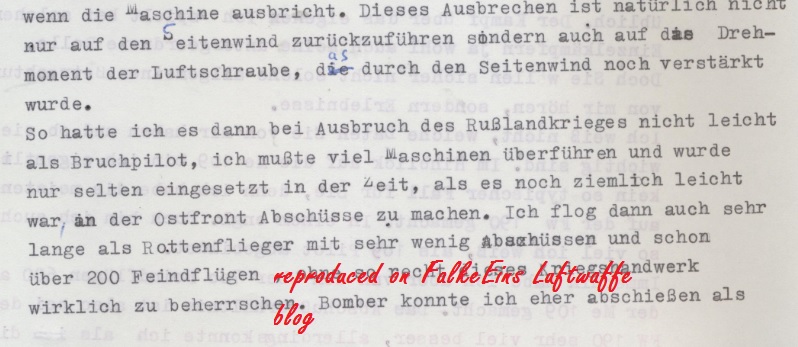
"..  my training lasted until February 1941. When I arrived at Jagdgeschwader Mölders on the Kanalfront I had never taken off from a concrete runway and only ever got airborne directly into the wind. With just a little side (cross) wind I veered sharply off the runway to the left. As I cut the throttle, the port gear left broke off and I spun around onto the port wing  ..my first ground-loop..('Ringelpietz'). I was a 'young  buck' and Gefreiter and this happened twice. My career as a fighter pilot was almost over before it had begun. Instead of 'washing me out' they sent me back home  -  'um starten zu lernen..' - to learn how to take off... of course 'das Ausbrechen' was not just down to 'cross winds' but the prop torque which we had not been told how to manage with the rudder.  ..[..] As a 'Bruchpilot'  I was tasked with lots of ferry flights and only occasionally flew sorties during the period when it was relatively easy to rack up victories. Then I flew around 200 sorties as a Rottenflieger and had very little chance to shoot down enemy aircraft..."

Schack claimed his first victory the day after the launch of Barbarossa, the German invasion of the Soviet Union. On 23 July 1941 his Gruppe was at Orsha, approximately 100 kilometres southwest of Smolensk, and flew combat air patrols along the Dnieper in the area between Mogilev and Zhlobin. That day he shot down a Tupolev SB bomber northeast of Babruysk and received the Iron Cross 2nd Class (Eisernes Kreuz zweiter Klasse) on 10 August 1941.


In October 1941, German forces launched the strategic offensive named Operation Typhoon which resulted in the Battle of Moscow. Schack claimed his second victory during this offensive when he shot down a Petlyakov Pe-2 bomber northeast of Yukhnov. On 23 October, he bailed out of his burning Bf 109 F-2 (WNr. 9189) following aerial combat in the vicinity of Kaluga. He achieved his third victory after 100 combat missions, on 10 November 1941. On 30 July 1942, he flew his 250th combat mission. That day, he also damaged Bf 109 F-2 (WNr. 8117) in a ground collision during a 'sharp start' (emergency takeoff) at Dugino in the Novoduginsky District. In October, III Gruppe predominantly flew combat air patrols in the vicinity of Rzhev where the German 9th Army was deployed.Schack claimed his 18th aerial victory on 15 October, an Ilyushin Il-2 ground attack aircraft shot down west of Bely.


" ..I preferred to go after the bombers since they were 'easier' to shoot down than fighters which rarely flew straight and level - and I wasn't a particularly good shot. This was the 'problem' I had with the Me 109  -  the onboard armament was mounted centrally along the flight axis so to hit anything you had to be a decent shot.  '...Ich war mit der 109 kein besonders guter Schutze..' Things changed decisively for me with the arrival of the Fw 190 at the front - you didn't necessarily have to have the enemy in the gun sight to hit them..."

During November 1942, III. Gruppe converted to the Focke-Wulf Fw 190 at Jesau, present-day Juschny, located southeast of Königsberg. Because Luftwaffe units were already stretched in the combat area of Army Group Center, fighting in the Battles of Rzhev, conversion was done in rotation, one Staffel at a time. The first units converted were the Gruppenstab (headquarters unit) and 7. Staffel while 8. and 9. Staffel were still engaged over the left flank of Army Group Center. In total, III. Gruppe received a complement of 41 Fw 190 A-2s and Fw 190 A-3s. On 16 December, the first elements of 7. Staffel arrived at Dugino. The next day, on his first mission on the Fw 190, Schack shot down five Soviet Pe-2 bombers in the vicinity of Sychyovka. Six weeks later, on 29 January 1943, Schack almost repeated this on a Junkers Ju 87 escort mission, when his Schwarm encountered eight Soviet Pe-2  crossing the German lines at Novosil. Within five minutes all eight were shot down including four by Schack.


" .. I'm not really what you would consider a typical Me 109 pilot as I scored most of my victories flying the Fw 190. I flew over 700 combat sorties, some 600 of these in the Me 109, so my 'kill' ratio in the Fw 190 was much better, 90 kills in around 100 sorties.. by the time the Fw 190 arrived in the East I  had acquired a lot of experience, I knew the trade craft of war better...on two occasions I downed four bombers in one sortie with the Fw 190..."

He claimed his 100th  in September 1943 and was awarded theRK on 29 October 1943. Schack was appointed Staffelkapitän of 9. Staffel and received the EL on 20 April 1944 following 133 aerial victories. In December 1944, he was appointed GKr. I./JG 51.

(to be continued..)

Also on this blog;

Sunday, 12 November 2023

Tuesday, 6 June 2023

Fw. Rudolf Wagner 10./JG 51 - ebay photo find #360


According to the seller, a series of images from the album of  Rudolf Wagner.

".. On December 11, 1943 another JG 51 ace was reported missing – Fw. Rudolf Wagner had arrived in 10./JG 51 in early 1942 and flew as Otto Gaiser’s wingman. He recorded most of his victories during the summer and fall of 1943 and had been credited with 81 kills at the time he went missing. His RK was awarded posthumously on March 26, 1944...".  


 https://www.ebay.co.uk/usr/ww2fotograf


Thursday, 13 October 2022

Uffz Heinz KLÖPPER, 2./ JG 77 - ebay photo find #357


Uffz Heinrich KLÖPPER, born 9 Jan 1918 in Gross-Bülten, was a 2./JG 77 pilot in May 1940. On 15 May six Bf 109s of 2./JG 77 intercepted five French fighters at Rosée. Two Morane 406s were claimed by Oblt Eckehard Priebe and Klöpper - they were in all probability Bloch 152s of GC II/1 up from Laon/Couvron on a bomber escort sortie. Klöpper's victory was not confirmed and Klöpper himself was shot down. Bailing out and not knowing if he would land in his lines, Klöpper unholstered his pistol during the descent - until he saw the uniforms of his compatriots coming to his aid. The personal emblem on his Emil (below) recalls this bail-out. During the Battle of Britain he returned his only victory with 2./JG 77 - a Spitfire over Dungeness on October 5, 1940. The Staffel became 11./JG 51 and went east for Barbarossa. During the first day of the assault, on 22 June Klöpper shot down his first VVS aircraft, a Soviet SB-3 bomber. During 1942 he instructed before returning to his unit. In March 1943, he was posted to 7./JG 1. As Staffelkapitän, Klöpper made his last kill on 26 November 1943, a USAAF P-38 Lightning. The next day he was killed over the Netherlands during air-combat with another P-38 Lightning and crashed near "de Oldenhof" castle in the vicinity of Vollenhove. Klöpper shot down a total of 94 enemy aircraft in approximately 500 combat missions. DK (21 Aug 42), RK on September 4, 1942.


on offer here

Monday, 15 August 2022

Teil 15/I 'Einsatz im Osten' - a new title in the Jagdfliegerverbände series - Prien/Bock/Balke/Stemmer


On 22 June 1941 the Jagdwaffe deployed some 20 fighter Gruppen in the East for Barbarossa, around 1000 aircraft more or less. This was a rather lower figure that the numbers of fighters deployed for the campaign in the West during 1940!  Barely three years later - and leading up to the massive Soviet  'Bagration' summer offensive - the Jagdwaffe had just 11 Gruppen and several 'independent' Staffeln available to cover the entirety of the Eastern Front -just over 300 serviceable fighters, some 75% of the total on strength in the East.  A 'Luftlagebericht Ost' dated January 2, 1944 put Soviet strength at 12,000 aircraft of which 4,500 were fighters. In fact the entire fighter arm of Luftflotte 6 in the middle sector of the Eastern Front, the Schwerpunkt of the 'Bagration' offensive, comprised the Stab/JG 51, I./JG 51 and several Staffeln, for a total of no more than 50-75 serviceable fighters. As at least one author/researcher has already pointed out, this was not necessarily the result of losses sustained or Soviet 'dominance' - even if the new 'Jak 9' and La 5 fighters arriving at the front to replace the MiG-1 and LaGG-3s were at least comparable to the Bf 109 G-6 or Fw 190. Entire Geschwader like JG 27, JG 3 and most of JG 77 had been moved to theatres in the West - Africa, the Mediterranean, the Defence of the Reich - because of the pressure being exerted by the Western Allies. Even the Geschwader left in the East during 1944 were not at full strength -  Staffeln went to the West as the military situation there worsened - 2./JG 51 under Oblt. Horst Haase was sent to join IV./JG 3 during May 1944 and  Staffeln from JG 51 and JG 77 went to join JG 1 and saw action in Normandy. Pilot strength in the East was further reduced as each Gruppe gave up a Staffel of pilots for the West in May 1944. III./JG 11 arrived in the East during June 1944 while II./JG 51 did not serve in the East until September.  Since the turn of the year the Luftflotten had been forced to deploy their meagre fighter resources piecemeal at 'crisis' points along the front, while the rapidity of the Soviet ground advance was such that those Gruppen present in the East were forced to fall back far to the West - as early as February 1944 in the southern area IV./JG 51 shifted to Orscha, followed in March by II./JG 54. From the same airfield I./JG 51 covered the left wing of HGr. Mitte as well as 16. Armee on the right wing of HGr. Nord. 

Below; from a PK photo series (Opitz) depicting G-6s of 3./JG 51,  'Brown 11' (WNr. 410 827) is being refuelled probably at Orscha in early 1944. (see pages 274 - 282 of Teil 15/I). Note yellow spinner.


Such was the dearth of Luftwaffe fighters on the Eastern Front that  a fighter training programme for the Schlacht Fw 190 pilots was implemented. 1./JG 51’s Günther Josten was seconded to Wilna, Latvia, on June 19 to train the pilots of II./SG 3 in the art of fighter combat. In his diary he described what happened on a training sortie flown a few days later on June 21, 1944 in collaboration with KG 1 Heinkel He 177s, part of a Luftwaffe long-range bomber force being assembled to strike at Soviet industry and production in the East:

“After an hour in the air a report came over the radio – 150 ‘furniture vans‘ (‘dicker Möbelwagen’ or ‘Viermots’) sighted 20km south of Warsaw heading east. The news left us dumbfounded. We were flying at 4600m altitude when suddenly we caught sight of the formation below us. It was the first time I’d ever seen anything like it. We overtook the formation and then turned around to attack them from head-on. I took my Schwarm directly through the bomber formation and brought effective fire to bear on two of the machines, one of which was left trailing a thick banner of smoke. By this stage we were running short of fuel and had to turn back for home..."

This was JG 51s first encounter with US 8th AF bombers and their P-51 escorts, the Americans en route to Poltava in the Ukraine on their first 'Frantic' shuttle mission -– from England.. I./JG 51 claimed two P-51s, one falling to the Staka 3./JG 51 Oblt. Walter Wever (his 37th)  while Uffz. Hans Stroinigg claimed the second P-51 along with a ‘Fortress II’ (his 11th). The following night Poltava and Pirjatin were raided by a force of IV. Fliegerkorps medium bombers and some 54 B-17s and 15 P-51s were destroyed on the ground.

The following day, June 22, the Soviet 'storm' 'Bagration' broke – four Soviet ‘Fronts’ launched against Army Group Centre initially aiming to re-take Minsk. The Gruppen of JG 51 found themselves in the direct line of the Soviet offensive in Orscha, Bobruisk and Mogilev and were forced to hastily fall back to the other side of the Polish border while claiming 33 victories without loss on June 23, including eight for Lt. Wilhelm Hübner in three sorties and five for his Staka Hptm.Edwin Thiel of the Stabsstaffel. Josten returned his 92nd and 93rd. 

German fighter defences  though were hopelessly inadequate. Some 140 'kills' were claimed during the period 22-30 June over the area of HGr. Mitte - while the Red Air Force flew  over 25,000 sorties! A German 'air situation report' dated July 1, 1944 estimated Soviet losses  for the four days from June 22-26 at just 0.8% of the aircraft committed. Front-line Soviet combat strength was now estimated to be 17,200 aircraft. So weak were the German forces that the entire front was broken through within a week and some 28 German divisions were destroyed. Eichenlaub holder Thiel (76 victories) was shot down and killed strafing a Soviet column on July 14 near Kobryn. The offensive ended in late August as the Russians were stopped at the Vistula river (Weichsel) on the East Prussian border and in front of Riga, Latvia. 

 This latest volume of Jochen Prien's mammoth history of the Luftwaffe fighter units, Part 15 Vol I reaches the Eastern Front 1944 - Operations in the East - 1 January to 31 December 1944. It is of course virtually impossible to 'review' these volumes - it will require months of careful reading to get the most out of history like this. (..the preceding paragraphs are based on data presented in the book)  Suffice to say that this is another 500-page tome from the Prien team filled with exceptionally detailed data from sources most of us are never likely to see and some 240 rare photographs. The major part of the text focuses on JG 51 (pages 211-493) - as there is no Geschwader 'history' as such -apart from the old Aders/Held title - most of this section is 'new'. The overview of the course of the ground fighting amounts to 25 pages - covered is the area of HGr. Süd in the first half of 1944 until the beginning of the Soviet summer offensive, ground operations by HGr. Mitte in the first half of 1944 until the beginning of the Soviet summer offensive and similarly in the area of HGr. Nord in the first half of 1944. The Soviet summer offensive against HGr. Mitte and the fighting on the northern section of the Eastern Front after the beginning of the Soviet summer offensive is also outlined, as is the fighting in the southeast - Romania and Hungary. This opening text section on the ground fighting is followed by an overview of the fighter units' operations in the East - 1 January to 31 December 1944, before the 'meat' of this volume - individual Gruppe histories for the period covered, starting with JG 5. Along with the usual loss/victory reports for the individual fighter Gruppen operating in the East through 1944, the operations of each are described through the Luftlagemeldungen (air situation reports), personal diary accounts (Josten, Schack) and log-book records. The so-called 'Startkladde' daily ops record for 7./JG 51 for the first five months of 1944 is published in full. Units covered in Teil 15/I are JG 5, III./ JG 11 (more over-sprayed Balken- and Hakenkreuze) and all four Gruppen + the Stab of JG 51. The Stabsstaffel JG 51 (190 Jabos) is covered over 45 pages.


Below;  seen left is Gruppenkommandeur III./JG 51 Hptm. Diethelm von Eichel-Streiber in front of G-6 'white 1' (WNr. 411 123) formerly on the strength of 7./JG 51 but transferred to the Gruppenstab when 7.Staffel was moved to West during May 1944. The Kommandeur himself was posted to the West in late August to take over I./JG 27  (partial caption info from Teil 15/I)


Below; seen in East Prussia/Lithuania is 'Black 1' flown by StaKa Lt. Anton Hafner 8./JG 51 during the summer of 1944 with tall tail, yellow spinner and rudder.


The publisher's website is jagdgeschwader.net

read our Luftwaffe blog interview with Jochen Prien here


Thursday, 7 January 2021

Fw. Kurt Knappe 5./JG 51


With Mayer’s departure from 7./JG 2 another JG 51 ace was posted in to further strengthen the Staffel, a Ritterkreuzträger with around 50 victories - Fw. Kurt Knappe. On completion of fighter pilot training in spring 1941, Knappe was posted to JG 51. Gefreiter Knappe was assigned to 5./JG 51.Knappe participated in the invasion of Russia and gained his first victory on 24 July 1941. By the end of the year his victory total had risen to nine. Uffz.Knappe gained his 50th and 51st victories on 4 October 1942 and was awarded the Deutches Kreuz in Gold. He was awarded the Ritterkreuz on 3 November 1942. Knappe was then transferred to 7./JG 2 at the end of November 1942 to undertake Reichverteidigung duties. On 20 April, he transferred to 10./JG 2 where he gained his final victories. On 3 September 1943, Knappe was shot down and killed in combat with USAAF B-17 four-engine bombers and escorting P-47 fighters over Evreux, France in Fw 190 A-6 (W.Nr. 470 016). Kurt Knappe was credited with 56 victories. 

Uffz. Kurt Knappe and his rudder scoreboard showing 51 victories - victories 50-51 were returned on 4 October 1942. The Ritterkreuz was awarded in November 1942 followed by a transfer to the West and 7./JG 2

Thursday, 17 December 2020

Jagdflieger Mölders und Beerenbrock, Dieter Pekrun StG 2 -ebay photo find #340


Believe it or not, this image of JG 51 Jagdflieger Mölders und Beerenbrock apparently dating from 1941 and offered for sale by a well-known Ebay repro photo seller went for nearly 500 euros!


Kommodore Mölders with Oblt. Walter Stengel, Staffelkapitän 6./JG 51


Messerschmitt-Me-109-Flugzeug-Pilot-berichtet-vom-erfolgreichen-Feindflug


..newspaper account published in a March 1942 issue of the NS Leipziger Tageszeitung written by Schlachtflieger ace Oblt. Dieter Pekrun relating his shooting-down (by Spitfires!) while piloting a Stab I./StG 2 Stuka on the third day of the Westfeldzug, 12 May 1940 - Pekrun managed to bail out and came down in a field of 'irate' cows at Geetbets, Belgium - behind  the lines. With his BS dead, Pekrun evaded the various search efforts mounted to locate him and returned home some 24 hours after being presumed MIA. Pekrun was awarded the RK in June 1941.


Thursday, 2 July 2020

"..Mit 96 nochmal die Messerschmitt Bf 109 G.." Erich Brunotte 13./JG 51


Just a few weeks ago former Jagdflieger Erich Brunotte flew again in a Bf 109 after a 74-year break. He went up in the Hangar 10 (Usedom, Mecklenburg-Vorpommern) Bf 109 G-12 Schulflugzeug ( a Merlin-engined Buchon) ..aged 96 years old.  Note the Luftwaffe pilot insignia on his jacket - swastika covered up..


Erich Brunotte was born on June 2, 1923 so he has just turned 97 years old.. From his early teenage years he turned to the aviation world and passed his A, B and C glider licenses between 1940 and 1941. On June 3rd, 1941, he entered the Luftwaffe to be trained as a fighter pilot. Between July 1942 and April 1943, he received various assignments on the eastern front, flying sorties with a Nauaufklärungsgruppe - short-range recce unit. In August 1944 he was posted to 13. Staffel of JG 51 "Mölders" and often flew as wingman to Heinz Marquardt. Some sources credit him with as many as 33 victories. According to his own account  - see video below from the 14-minute mark -  Erich Brunotte flew his last sortie on May 3, 1945 from Flensburg in northern Germany at the controls of Focke Wulf 190 D-9 "Weisse 11". A single click to view here - a double click to go to Erich's youtube channel.


Also on this blog;

JG 54 ace Hugo Broch flies the Spitfire

https://falkeeins.blogspot.com/2017/06/hugo-brochs-spitfire-flight-today.html


Friday, 3 April 2020

III./JG 51 Gefr. Gabriel Tautscher - Ebay photo find #328


III./JG 51 Gefr. Gabriel Tautscher, "hochgenommen" to mark his 50th. He was a recipient of the  DKiG for this achievement.

Rare image of one of only 24 Jagdflieger to achieve 50 victories and not to have been awarded the RK. By late 1943 award criteria was at least 75 victories and a number of aces had returned well over one hundred victories before being awarded the RK.
Tautscher returned his first victory on October 23, 1942 south-west of Subzow (captured October 11, 1941 and retaken by the Red Army during the first Rschew-Sytschowka-Operation on August 23, 1942). Tautscher was the highest scorer in 9.Staffel during the Kursk offensive. His best day was 12 July 1943  - he claimed three LaGG -3 and two MiG-1 fighters and added another two victories the following day. On July 17 he claimed four - three LaGG-3s and a single LaGG-5. He scored at regular intervals through August 1943 with his next handful of claims not being until December.
Tautscher of 9. Staffel was shot down by Soviet anti-aircraft fire - Flakvolltreffer -on January 12, 1944 north of Osaritschi. This was also the date of his final 'claim', an Il-2 - it was usual Jagdwaffe practise to assign a final claim to a fallen ace. Tautscher's final 'score' was 55 vics.
Photo published on p. 244 of " Das Jagdgeschwader 51 - JG Mölders" by Paul Stipdonk and Michael Meyer.


Friday, 3 May 2019

Two Me 109s shooting down a barrage balloon


              "Zwei Me 109 Jagdeinsitzer vernichten einen feindlichen Fesselballon"   - Two Me 109s shooting down an enemy barrage balloon

Lt. Hans-Otto Lessing, JG 51, Wissant, Channel coast,  letter home 17 August 1940

" ..yesterday I returned my fifth victory. This includes two barrage balloons, which count as one 'kill'.. that is not many when you consider how many opportunities we have had, but they do not always go down when you shoot at them.."

Thursday, 6 December 2018

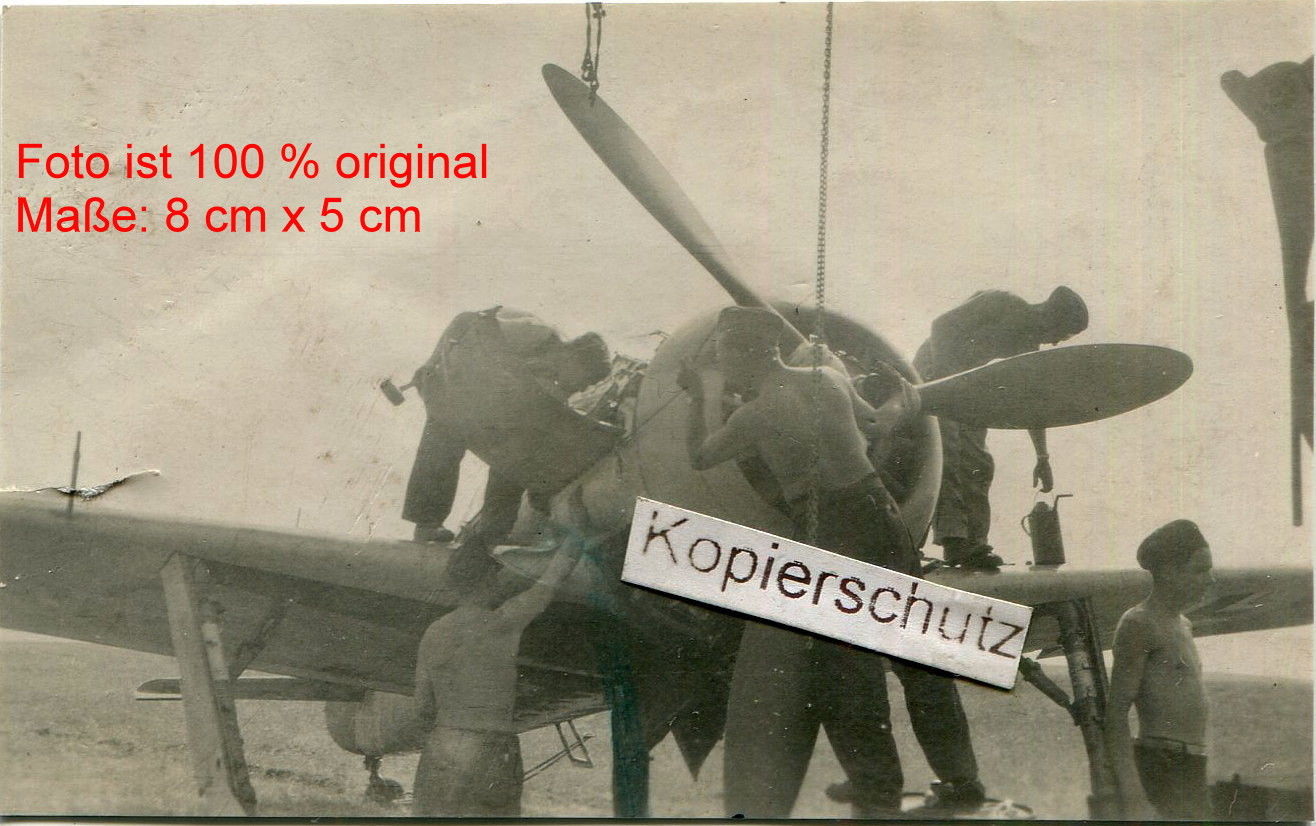
Focke Wulf FW 190 "mein erster Bruch, Jagdgeschwader Mölders", Wartung am Motor - ebay photo find #297


via Oliver Rogge - scenes from Værløse airbase, Denmark Me 109 12./JG 5 according to the seller


Below; two from the Harder family album


More on this blog;
Bundesarchiv photo report Gruppenkommandeur I./JG 53 https://falkeeins.blogspot.com/2015/09/bundesarchiv-photo-report-series.html