Showing posts with label JG 5. Show all posts

Saturday, 28 January 2023

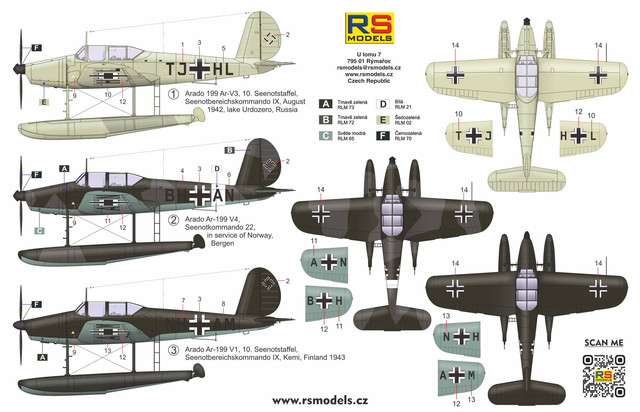
more on the Arado Ar 199s - 'TJ+HL' Ar 199 V-3 10. Seenotstaffel, Norway, August 1942.


A little reference for a build of the RS Models Arado Ar 199 as recently featured in SAM (Scale Aircraft Modelling)  


 The Ar.199 was a development of the Ar.79 two-seat sports/trainer, 'crossed' with the Ar.196 float design conceived during 1938-9 for advanced training of seaplane flight crews. The cockpit featured twin tandem (side by side) pilot controls, and in the rear cockpit, equipment and space for a trainee/radio operator. 

Unlike the wooden Ar 79, the new aircraft was all-metal and was suitable for ship-borne catapult launch. The first prototype (Ar.199V-1) flew in 1939, followed by the V-2 and V-3. All were powered by the 450 hp Argus As 410C engine with two bladed prop. Although a 'successful' design only around 30 aircraft of the type were built, most of them being constructed in Paris at the SIPA factory (see link below) .

 Very little is known about the career of the Arado 199; most were dispersed piecemeal in schools or Seenot rescue units. Two of the prototypes, including the V4, were stationed in Bergen for some time, starting in late 1940. It is known that the V3 was lost on 14 August 1942 while attempting to rescue a shot-down Bf 110 crew in Finland; surprised by Soviet fighters, it was wrecked by their machine gun fire (full story below). Left to rot in its remote location it was still in situ as late as 1994, when the wreck was recovered and dispatched across the Atlantic. The V1 served with 10. Seenotstaffel and was photographed at Santahamina (Finland) in June 1943. It is also likely that A-0 0007, 0011 and 0026 joined it at the same time.  Ar 199 coded 'KK+BT', served at the Seefliegerschule Bug in Rügen in May 1944. Finally, 'KK+BX' joined 5. Seenotstaffel in Tromsö in January 1944. An A-0 coded DM+ZE had to make an emergency landing near Tournai on 15 May 1943 and was destroyed there. A few days later, on its way from the SIPA factory to Travemünde, WNr. 0017 sustained slight damage  during a forced landing in the Chartres area.

Two 'new' and rare views of a 'stranded' Arado Ar 199 - is this WNr. 0017? Further details unknown..


The third prototype (Ar.199 V-3, above) initially had the civil code D-ITLF (WNr. 3673). During the summer of 1942 and coded "TJ+HL" the machine  served with 10. Seenotstaffel, the main base of which was the port of Tromsø, Norway. It was lost during August 1942 during a 'rescue attempt' . The story via 'Jet & Prop' 6/94, Girbig's Jagdgeschwader Eismeer and the sk16ru forum -  translated and edited by FalkeEins.

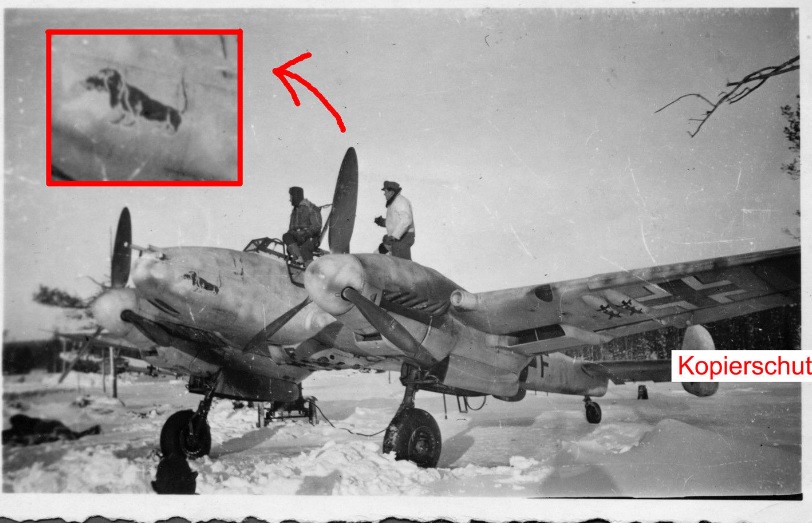
On August 13, 1942 at 14:12 some fourteen Ju.88s were airborne from Banak airfield to raid the Varlamovo-1 airfield (as the Germans called Vaenga-1). Bombing at 15:47 from a height of 6500 m, they attacked the northern part of the airfield and observed "good hits on the edge of the airfield and aircraft dispersals." Some 13 SD 250 and 246 SD 50s were dropped. As defensive measures, the Junkers noted only well-aimed anti-aircraft guns in the area from Rost to Polyarny. They sustained no losses. Escorting the Ju 88s were six Bf 110s of the 'Dackelstaffel' 13.(Z)/JG 5 airborne from Kirkenes airfield at 15:02. One returned home due to technical problems. After completing their mission 3 "Messers" under the command of the future ace Weissenberger were caught up in combat with a group of Soviet aircraft, identified by the Germans as 8 "Tomahawks" some 10 km west of Murmansk at  an altitude of 3000 m. The Germans filed a claim for one Soviet fighter, which was allegedly shot down by the gunner-radio operator Uffz. F.K Schröder. He did not have time to celebrate his victory: his Bf 110, flown by Lt. Hans-Bodo von Rabenau, received fatal hits. With one engine on fire and the other streaming glycol, the Bf 110 stood little chance of making it home.

Von Rabenau ordered the crew to jump. In addition to his BF there was a third 'crew' member on board, Kriegsberichter (war correspondent), Sonderführer Kuhnke. Schröder, wounded in his arm, was the first to leave the machine. He was followed by the "propagandist". Judging by his report, at that time the pilot was alive and well, and the plane was at an altitude of 1500 m. However, Rabenau did not bail out, but crashed and burned at the controls of his Bf 110 F-2  (WNr.4547, coded 'LN+MR') attempting a forced landing on the tundra. The crews of the other Bf 110s looked on as their comrade went down. They also saw the two parachutes. The location for these events was described as 40 km southwest of Murmansk. From Soviet accounts Rabenau and his crew fell victim to pilots of the 19th IAP.

As soon as it became clear that the Bf 110 had been downed and that the crew remained on enemy territory, the Germans began to conduct search sorties. For this purpose, Bf 109s were sent out along with Hs 126s from 1.(H)/32 which were airborne from Petsamo between 17:26-20:33. It was the Hs 126 that located the burned-out plane 6 km east of Lake Urd, but failed to spot any sign of the surviving crew. At 22:30, two Bf 110s flew to the scene - Weissenberger and Hauptmann Schmidt. They also found the downed 110, only its location was determined as "9 km east of the southern tip of Lake Urdozero." A kilometer away, Kuhnke was also found and the Bf 110 dropped flares and an emergency supply of food. The Soviets had noted the German search activity in the area of Lake Urdozero and suspected that a particularly important crew member had been shot down there - in their words " no ordinary 'Fritz' pilot would have been looked for as carefully nor for as long.."


Sorties continued through the Arctic 'night' - the Schmidt-Weissenberger Rotte escorted one "Storch" at 03:50 flown by Ofw.Rollnik from the "Zerstörerstaffel". Having found Kuhnke, the Fieseler attempted to land and pick him up, but the terrain was unsuitable - swamps and small lakes. So another "summer emergency kit" was dropped off to the 'propagandist', as well as directions on how to proceed. The Sonderführer was supposed to reach the southern tip of Lake Urd by 10:00 and wait there, marking himself with light signals and coloured smoke cannisters.

Since they were going to save Kuhnke from the shore of a large lake, the Germans decided to send a small seaplane in for him. At 13:07 the Ar.199 coded "TJ + HL" took off from Kirkenes with Ofw. G. Urtel at the controls and Hptm Schmidt's BF radio-operator as a 'guide' in the rear. The Arado was escorted by the same pair of Bf 110s. The German planes arrived at the rendezvous site with no problem but found no one there. However, after circling overhead, they nevertheless found the missing crew. Hptm.Schmidt spotted Kuhnke on the shore of the neighboring Lake Veznyavrsh (south of Lake Urd). Inexperienced in traveling through the tundra, the Sonderführer was apparently lost and was at the wrong lake. This 'mistake' would have sad consequences for them. Just as the Arado managed to put down and launch its inflatable dinghy to attempt to retrieve Kuhnke from the eastern shore, Soviet fighters intervened in the rescue operation.

As soon as the Germans appeared in the area of Lake Urd, pilots of the 19th GIAP and their colleagues from the 197th IAP were quickly in the air - two P-39s and two P-40s and six Hurricanes at around 14:00..

The descriptions on both sides look rather confusing. According to the Germans, two "MIGs" suddenly appeared and attacked the Arado already taxiing to take off and were able to damage it. The right float was shot through, which made it impossible to get airborne. Photographs of the wrecked Arado show that it is listing to the left, and it is the left float that is in the water. Immediately after their success, the Soviet machines themselves were hit by "three" Me-110s, claiming one downed - small consolation for the failure of the rescue mission.

The Germans continued sorties to the area of ​​Lake Urd. From 15:00 to 22:00, 16 Bf 109s from II./JG 5 flew there from Petsamo and at 18:25-19:30 a pair of Bf 110s from Kirkenes. Four crew members people were found 10 km west of Lake Urd on the march towards the front. They were told to move in the direction of field patrol No. 11, from where, in turn, German soldiers were advancing towards them.

..When the seaplane took hits, the pilot Urtel was able to taxy it to the northern shore of the lake. Having taken out an emergency ration and a canister of water from an undamaged float, the Germans destroyed the dashboard and radio, and then went ashore. They also took with them a machine gun, 2 drums with cartridges and navigational instruments. According thier account Soviet aircraft soon arrived and began to strafe the Arado, however, they could not even set fire to it. The Germans at that time were hiding in the forest along the shoreline and escaped with only a slight fright.  According to Soviet accounts, on the next day (August 15) and on the morning of August 16, an Sh-2 seaplane twice returned to the scene.  As recorded in their report Soviet pilots found the enemy seaplane burned out and wrecked but also removed weapons and instruments from it. However, judging by the photo, the Arado, although crippled, does not show signs of a fire.

On August 15, Bf 109s and Bf 110s flew a number of sorties in search of comrades wandering through the tundra. The fugitives were again found walking in the right direction, there was no pursuit. A German patrol was located just 60 km from the 'place of death' of the Arado. Fortunately for the four pilots, Friedrich had just put it on his map recently. Therefore, laying the route was not difficult, and the main task was to cross the road from the Motovka camp to Ristikent. Here, too, the shot-down crew were lucky. The “road” marked on the map in reality turned out to be just a well-trodden path.  It was hard enough overcoming the numerous swamps, while enduring the rain and the cold over night wind. Half-frozen they finally reached German lines on August 15.

It is worth mentioning that Schroeder, who was not discovered during the search operations, was also able to get to German-controlled territory alone, and on August 16 he almost reached Petsamo airfield itself. After treatment in the hospital, he did not return to Norway, but was assigned to V./KG 40.

The Arado remained for many years in the lake, its floats sinking deeper and deeper into the bottom sediments. The place was quite remote and no one touched the “exotic waterfowl” until a power line was pulled past. For the sake of interest, the workers tried to pull the plane ashore with the help of a tractor. At the same time, the struts of the floats broke, and one float remained in the water. In the intervening period the Arado lying on the shore was visited by curious hunters and fishermen. They left traces of their "curiosity" - a tail section with the swastika shot through, the cockpit smashed. When told that the Arado had been located H-H Schmidt was amazed that anything survived as the machine was regularly overflown by JG 5 and used for 'target' practise as the Germans sought to set it alight. 

Also on this blog;

Arado Ar 199 manufactured in Paris by SIPA here

Sunday, 22 January 2023

Hptm. Herbert Treppe 13.(Zerstörer)/JG 5


Born in Sprottau (now a town in western Poland) on January 30, 1914, Herbert Treppe studied at Breslau university, joining the Marineschule Mürvik in April 1935 where he learned to fly. He studied at the Luftkriegsschule Gatow 1935-36 (note two 's') and received his A/B licences at Celle in September 1936. His 'Lehrlingszeit' concluded with five months blind-flying at the Blindflugschule Wesendorf and subsequently he became an instructor in Brandis. Determined to join a front unit he was posted to KG 26 late in 1940 and according to one source flew in the 'Luftschlacht um England' (Battle of Britain). He flew both day-and-night sorties against land and shipping targets in England and Scotland. On one occasion he succesfully belly-landed his badly shot-up Heinkel He 111 with four wounded crew members in Beauvais after surviving a night-fighter attack.  On February 21, 1941 he was forced to ditch in the North Sea/Skagerrack and spent five hours in a dinghy in temperatures well below freezing before being found. He did not return to flying duties until October that year. After a spell as Ic to the Fliegerführer Nord he flew combat against England, Murmansk and in support of the German army in the Far North. He was appointed Staffelkapitän of 13.(Zerstörer)/JG 5 on June 1, 1943. He wrote an account of one of his first sorties leading the Staffel that summer, claiming two Bostons downed for a 'Doublette' -  as he put it, ".. not bad for a new boy". There are apparently no corresponding Boston losses in Soviet records.


13.(Z)/JG 5 re-equipped with the Bf 110 G early in 1943. Treppe flew Messerschmitt Bf 110 G-2  "1B+AX" (W. Nr. 120 037) out of Kirkenes during autumn 1943 as illustrated here by Kjetil Åkra in Eduard-Info 2015. 


The Zerstörer Staffel was re-named 10./ZG 26 in July 1944. Later in the year Treppe was named as Gruppenkommandeur of IV./ZG 26 (formed during the summer of 1944) and claimed an RAF Coastal Command Liberator on 28 September 1944 timed at 1245 hrs at only 5 metres altitude (over the sea). 

IV./ZG 26 became the new II./JG 5 in February 1945 with Treppe as Kommandeur. As related by Jan Bobek in Eduard-Info 2015-10 the newly reformed II. Gruppe was built up from elements of 9., 12., and 16./JG 5, and partly from the Stab IV./ZG 26 and 10./ZG 26. Interestingly the Messerschmitt Bf 110 Gs from the defunct Zerstörerstaffel were divided amongst the three Gruppen of JG 5 with single-engined fighters and were flown up to the end of the war. 

While the 'Luftwaffe Officer career summaries' page indicates that Treppe passed away in 1984, Jägerblatt published a 75th birthday profile in the December 1989 issue. At this time Treppe was 'Vorsitzender' of the 'Traditionsverband JG 5'.

Friday, 19 November 2021

III./JG 5 Gustav - ebay photo find #348


" ..Our successful Eismeer fighters receiving an unexpected visit....the four-legged comrades of our Gebirgsjäger are already used to the aircraft - even the roar of the engines being run-up barely bothers them.." 

PK photo of  a Bf 109 G-2 of III./JG 5, Feb./March 1944. There is a series of this 'reindeer visit' on pp138-141 of  Erik Mombeeck's Eismeerjäger, Band 3 (Jäger). The pilots were from 8. Staffel. (Thanks George)

Friday, 5 June 2020

AZ Bf 109 G-6/AS Hptm. Horst Carganico Kommandeur I./JG 5 'Mickey Maus' in 72nd scale


Continuing with the small-scale Bf 109 theme and built from the AZ Bf 109 72nd scale kit, this is my representation of Hptm. Horst Carganico's G-6/AS from May 1944, displaying the personal 'Mickey Maus' and 60-kill rudder scoreboard of the Kommandeur I./JG 5 as photographed at Herzogenaurach during May 1944.

 As a far better modeler than me put it, " I keep going back to the 1:72nd scale AZ Bf 109s ...and then reality hits home.." Now - based on just one build so far - I decided that I quite like AZ Model's Bf 109 G-6 series - 'Model of the Year 2015' in the small scale category in the German 'Modellfan' magazine. I've just added a couple of G-6/AS variants to the stash and bought both the 'Limited Edition' JG 300 boxes.


But I'd forgotten how tricky these kits are - not much fits well unfortunately. Especially where the cockpit is concerned - a large chunk of that need sanding down to get it between the fuselage halves. The G-6/AS variant featured a refined cowl, tall tail and enlarged supercharger - Peter Schmoll refers to the variant as being 'Beulenfrei'. Hence the parts in the box are the same as those featured in AZ Model's Bf 109 G-10 boxes. However for a G-6/AS as depicted in this box the chin bulges will need to be sanded off - AZ don't tell you this anywhere.

Decals are taken from an old Encore Models Gustav sheet and performed just fine considering that they must be at least 15-20 years old - the coloring of the 'Mickey' emblem is probably not 100% accurate (note the red shorts..) and there is no actual image of Carganico's rudder scoreboard although he had some 60 victories by the time he was shot down and killed over southern Germany during May 1944. Perhaps his machine did not carry any other markings but on the starboard fuselage side I have used standard command chevrons. Note AZ do not give the modeler a spinner spiral ! These have to be sourced separately or else purchased on a separate sheet from AZ  ( thanks Jan .. no I haven't forgotten!)


Horst Carganico flew in Norway and Finland from the first days of the invasion in April 1940 until March 1944. He then departed the Eismeer front and II./JG 5, being appointed Kommandeur I./JG 5 in the Reichsverteidigung. By then his Mickey Mouse personal emblem was well known. In official German papers his aircraft was listed as "Mickey Maus".  Erik Mombeeck's 'Luftwaffe Gallery' JG 5 'Special Album' features an interesting photo of this machine. It is apparent that the aircraft was painted in light blue-grey overall (standard G-6/AS Höhenjäger finish) The picture is partially double-exposed, showing part of the wing - confirming the wing cross (black, filled, and not white outline as per my model..)  and the single-colour finish of the wing. On May 27, 1944, aged 26 years old, Carganico was killed in this machine crashing after colliding with power cables while attempting to make an emergency landing following combat with P-51s - no fewer than 13 of the nineteen I./JG 5 Bf 109s deployed against an 8th AF raid against rail hubs and infrastructure in eastern France and s-w Germany were lost that day. Carganico's body was repatriated back home to Berlin and he was buried on June 6, 1944. His father, Generalmajor Victor Carganico died exactly one year later - May 27, 1945 -  shot by Soviet troops.

According to some sources, Carganico's machine may have been a  a G-5/U2. This is essentially the same as a G-6/AS, only with GM-1 or MW-50 booster injection installed. The Erla canopy means that the G-5 pressurised cockpit features were of course absent. The cowling was 'bulge-free', like the G-10 and K-4. Standard 160/660 wheels, small 'tear-drop' wing bulges, low tail wheel and tall tail.


extract from Luftwaffe Gallery 'Fighters of the Midnight Sun' still available from http://www.luftwaffe.be/luftwaffe-gallery/


Friday, 22 February 2019

RAF B-17s attack the 'Admiral Scheer', 8 September 1941 - JG 5, Lt Alfred Jakobi, Bf 109 T


"..On 8th September 1941 German fighters easily shot down two of the four Fortress Is of No. 90 Sqn RAF dispatched to bomb the German pocket battleship Admiral Scheer docked in Oslo, Norway. By September 1941 the British had lost, in combat and accidents, nearly half of their 20 B-17s. Somewhat disappointed, they relegated the remaining aircraft to Coastal Command for long-range patrols..."

The B-17 Flying Fortress was offered to the RAF early in 1941 and the first combat missions were flown during the summer of 1941. One of the first large-scale raids flown over the Continent was 'Operation Sunrise', a daylight raid mounted on 24 July 1941 against the German battle cruisers Prinz Eugen, Scharnhorst and Gneisenau holed up in the port of Brest in which three B-17s took part. The RAF's first B-17s were some twenty examples of the thirty eight B-17 Cs produced in the spring and early summer of 1941, designated Fortress I in RAF service. Forty RAF aircrew were trained at McChord Field, near Tacoma, Washington, from January-April 1941, before the aircraft was issued to No. 90 Squadron at Kinloss in Scotland. By 12 September 90 Squadron had carried out 22 raids, involving 39 Fortress sorties. Of those 18 had been aborted, two had bombed secondary targets and nineteen had bombed their primary targets. Only two 1,100 lb bombs were recorded as hitting their target. In that period two aircraft were shot down and two more crashed on landing after being badly damaged. One of their least successful raids was the attempt to find and bomb the heavy cruiser 'Admiral Scheer' anchored off Oslo, Norway on the morning of 8 September 1941.

The 90 Squadron machine WP-D/AN 525 "D-DOG" shot down on 8 September 1941 may well have been the first Fortress to come down in Europe

Crew: F/O David A A Romans (RAF)- P/O Frank Gordon Hart (RAF)- Sgt. John Brown (RAF)- Sgt. Peter Barnard Corbett (RAF)- Sgt. Robert Henry Beattie(RAF)- Sgt. Walter George Honey(RAF)- Sgt. Henry Merrill (RCAF). Their aircraft was downed by Jakobi and Steinicke of 13./JG 77 flying Bf 109 T-2 fighters although the congratulatory telegram from HQ see below) mentions Uffz. Karl-Heinz Woite (2./JG 77) as one of the successful pilots. Note the finish - the DG/DE/PRU blue scheme.


 In all eight of the twenty aircraft were lost in two months and the Fortress was withdrawn from operations over Europe. The performance of the Fortress confirmed the RAF in its belief that no daylight bomber could operate safely against the German air defences. The Army Air Force pointed out that the RAF was using the aircraft above its designed operating height and was badly overloaded, reducing its performance. The high altitude caused some of the guns to freeze up. The Americans also pointed out that the RAF were operating the Fortress in tiny groups, sacrificing the perceived benefits of mutual defence. The RAF experience did prove that the B-17 could not fly high enough to avoid the German fighters – the Bf 109 E and Bf 109 F could both intercept the Fortress at 32,000 ft. The Flying Fortress remaining in RAF service in limited numbers throughout the war. The most important user of the aircraft was Coastal Command. No. 220 squadron took over the Fortress Is of No. 90 Squadron..

An account of  'Operation Sunrise', appears on this blog here.

Friday, 12 October 2018

Alarmstart Norwegen JG 5 - Ebay photo find #289


via Oliver Rogge, link below


on offer here

Tuesday, 21 August 2018

JG 5 Reichsverteidigung Staffelkapitän Lt. Paul Weitzberg KIA 2 November 1944


I recently came across two surprising comments on two different threads concerning JG 5 on the TOCH forum;

firstly; that Peter Schmoll's latest book 'Me 109 Production und Einsatz' 'erroneously' depicts a Gustav in JG 5 markings overflying a German town as the jacket illustration, and, secondly, that three JG 5 pilots were KIA over Holland on 15 August 1944 including Lt. Paul Weitzberg of II./JG 5  (thread here)

 Established in January 1942, II./JG 5 was a successful Gruppe in the Eismeer Geschwader fighting in the Far North. Among several ace pilots that had flown with this unit were Major Horst Carganico, Major Heinrich Ehrler, Ofw. Rudolf Müller and Oblt. Hans Döbrich…

However, with an 'invasion' of the Continent looming and the Reich being pounded almost daily by huge bombing raids, the Gruppe -along with I./JG 5 - transferred in late May 1944 from the Artic Circle to southern Germany. Here they re-equipped with new Bf 109 G-6 fighters. In June 1944, both Gruppen were sent to France to oppose the Allied landings in Normandy, I./JG 5 flying out of Herzogenaurach during 6 June. II./JG 5 was still in Gardelegen re-equipping and did not fly to France until mid-June.  (cf. Jochen Prien, JfV 13/III)

Elements of Hptm. Theo Weißenberger's I./JG 5 arrived on the 'Invasion' Front at Montdidier in the vicinity of the French capital on 6 June while Weißenberger himself and the rest of his Gruppe clashed with P-47s coming into Montdidier on 7 June. I./JG 5 also saw combat over Beauvais that same day and in total Weißenberger claimed five victories. He filed a further three claims the following day. In the Bundesarchiv image below he is seen on 8 June 1944 being interviewed by a Kriegsberichter. In the background, left, is Oblt. Lothar Gerlach, Staffelkapitän of 1./JG 5. Weißenberger went on to return his 199th and 200th victories on 25 July and with some 25 victories was easily the most successful Jagdwaffe pilot over Normandy - although a number of his 'invasion victories' cannot be confirmed from Allied records.

Eichenlaubträger Hauptmann Weißenberger, Gruppenkommandeur in einem Jagdgeschwader bei einer Nachbesprechung. Prop.-Kp. Lw.KBZ 15 Film-Nr.: 8279/10 Bildberichter: Schödl 4.10.44


Both Gruppen of JG 5 fell back to the Reich in late July. II./JG 5 occupied a number of airfields through this period, moving from Herzogenaurach, Salzwedel, Werl, Sachau and Rheinsdorf before finally arriving at Finsterwalde. During August 1944 combat over the Reich was particularly murderous for II./JG 5 - some seventeen II./JG 5 pilots were killed in combat with  four-engine bombers, one of the bleakest months in the unit's history. However Lt. Paul Weitzberg was not one of them.. in the image below taken during August 1944 Lt. Paul Weitzberg, Stk. 5./JG 5 was photographed in front of the Me 109 G-6 "gelbe 1" assigned to his friend Staffelkapitän 4./JG 5 Oblt. Günther Schwanecke...


16 October 1944 was the last day the unit fought under the designation "II./JG 5"- two pilots were killed, a single pilot was wounded and no less than sixteen aircraft were lost. Four days later an order emanating from Luftflotte Reich re-designated II./JG 5 as IV./JG 4. The Gruppe, still at Finsterwalde, was organised as follows;

 IV./JG 4 (ex-II./JG 5): Hptm. Franz Wienhusen,

13./JG 4 (ex-5./JG 5): Lt. Paul Weitzberg,
14./JG 4 (ex-6./JG 5): Lt. Ernst Scheufele,
15./JG 4 (ex-4./JG 5): Oblt. Lothar Wolff,
16./JG 4 (ex-8./JG 5): Oblt. Hans Schleef.

Staffelkapitän of 5./JG 5 since 1942, Hptm. Franz Wienhusen had spent several months at Lamsdorf in Upper Silesia as an instructor before being appointed to command II./JG 5 in September 1944. He had achieved around twelve victories in air combat.

 Lt. Paul Weitzberg had been posted to 4./JG 5 when the unit was still in Norway during 1943 before succeeding Hptm. Franz Wienhusen at the head of 5. Staffel during the spring of 1944. Among his pilots was the experienced Ofw. Hermann Holtkötter who had flown for a long period with I./JG 5 prior to moving to 5./JG 5.

 Leutnant Ernst Scheufele had joined 12./JG 5 as early as 1 July 1942 and had seen almost constant front line action ever since. Posted to II./JG 5 on 1 October 1943, he had been appointed to command 6./JG 5 on 15 March 1944 - his experience and length of service meant that he was regularly called upon to replace the Kommandeur in the air. Scheufele had tallied eighteen victories, including a Thunderbolt and a number of four-engine bombers. Among his pilots were Fw. Erhardt Mecke and Uffz. Berthold Klaus, both of whom had achieved around ten victories.

 Oblt. Lothar Wolff was an experienced Zerstörer pilot. Gruppenadjudant in IV./KG 40 since 1943, he had fought most notably in the bloody clashes over Normandy before undergoing a single-engine fighter conversion course.Officially he had tallied four victories - two Wellingtons, one B-17 and a single B-24- which he had achieved at the controls of a Ju 88. He had been posted to II./JG 5 at Finsterwalde just in time to undergo his baptism of fire at the controls of a Bf 109 during the bitter battles of 16 October. Among his experienced pilots was Uffz. Hubert Schubert.

 Oblt. Hans Schleef was one of the seven Ritterkreuzträger to serve with JG 4. He had received the award on 9 May 1942 for the 41 victories he had achieved while serving with 7./JG 3- during this period he had been shot down behind the front but had managed to return to German lines some four days later. Schleef had subsequently been appointed to command 8./JG 5 on 21 July 44. At the time IV/JG 4 was stood up, he had downed some 97 enemy aircraft.

"... Finsterwalde - 2 November 1944. Weather conditions were poor. The cloud ceiling was at 800 metres. The Gruppe was put on thirty-minute readiness. After about an hour's waiting an 'Alarmstart' was suddenly ordered - the signal flare shot up from the operations building - scramble! The four machines of our Staffel were led off by our Kapitän, Lt. Weitzberg - heading due west. We hadn't been in the air for very long - no more than about fifteen minutes - when we came across the first Pulk of bombers at around 4,000 metres altitude. I waded in to set up for a head on attack on a box of six B-17 G Fortresses, squeezing off the first bursts from about 400 metres. It was then that I realised that I was all on my own and could only imagine that my comrades had been caught up in a tussle with Mustangs somewhere behind me. As I hurtled in towards the bombers I now bore the brunt of their defensive fire - a number of hits slammed into my 109 - in particular the oil tank was perforated and great gobs of the viscous liquid coated the canopy severely restricting my forward vision. Thick bitter smoke seeped into the cockpit and then suddenly flames erupted from the engine cowl and the engine seized. I quickly jettisoned the canopy, which flew free. I tore off my flying helmet and prepared to jump. At this point I noticed that the chute which lay in the seat-pan appeared to have been damaged which made me think twice about bailing out- I elected to try and glide down for a crash landing. Pointing the nose down into the cloud layer I soon had ground visibility and headed for a field running alongside a village. By now flames were whipping around the cockpit but I successfully guided the 109 down for an emergency landing and managed to scramble clear of the blazing machine. I ran clear in the direction of the village. Suddenly I heard a shout behind me - "Halt- stehen bleiben!". A bicycle-mounted police man had a pistol trained on me - as I was covered in oil and my face was charred by second degree burns I suppose he may have taken me for a black American. My life jacket also concealed the rank insignia on my uniform. I was marched into the village at gun-point - my eyes had closed up with the burns - before I managed to persuade my 'captor' that I was in fact a German pilot - I was then taken to hospital in Dessau .."
(Uffz. Friedrich Zenk, 13./JG 4)

Four IV./JG 4 pilots were shot down and killed during this sortie on 2 November 1944 - among their number was the Kapitän of 13. Staffel, Lt. Paul Weitzberg. Weitzberg fell to a Mustang while he was lining up to come in for an emergency landing at Zerbst.

Just six Bf 109s of IV./JG 4 managed to return to Finsterwalde. Both here and at Welzow, there was deep dismay at the outcome - each of the Gruppen had lost a Staffelkapitän. Hptm. Erich Jugel would be succceeeded by Oblt. Werner Vorberg, while Lt. Paul Weitzberg was briefly replaced by his friend Oblt. Günther Schwanecke until the latter was posted to a Gruppenführer training course. Lt. Josef Kunz was appointed Kapitän of 13. Staffel on 10 November. He had recently completed the Verbandsführerlehrgang - formation leaders training course - at Königsberg/Neumark and had been a member of III./JG 5 since the Gruppe had been set up in June 1942.

- Note the account of the sortie flown on 2 November is a translated extract from Erik Mombeek's "Storming the bombers" Volume II  (translation by this blog author). More info here
- Image of Weitzberg via Peter Neuwerth and his excellent site devoted to JG 5 and JG 7 here
- Jochen Prien's Jagdfliegerverbände series including the latest tome, Teil 13/ III, is available via jagdgeschwader.net here

Wednesday, 9 November 2016

Bf 110 SKG 210 Kennung S9 + NN in Rußland - RK holder Herbert Kutscha, Dackel Staffel JG 5 Bf 110

Bf 110 der 1. SKG 210 mit der Kennung S9 + NN aufgenommen in Rußland. Es ist die Maschine von KC holder Herbert Kutscha. Sehr schön sind das Staffelabzeichen und zahlreiche Details zu sehen!


Herbert Kutscha (1917-2003) served with II./JG 77 at the beginning of the war, but he was soon transferred to 5./ZG 1 equipped with Messerschmitt Bf 110s. During the Battle of France, he shot down a number of aircraft, including a Bf 109 of the air force of neutral Switzerland. Later, he also gained much success on the Eastern Front as a ground attack pilot, partially due to his II./ZG 1 evolving into II./SKG 210. Kutscha's II.Gruppe/SKG 210, under the command of Hptm. Rolf Kaldrack specialized in ground attack operations, specifically low level bombing. Kutscha was awarded the RK after his 22nd victory. At that time his ground tally was 41 aircraft destroyed on the ground, 41 tanks, 15 locomotives, 11 anti-aircraft guns, and 157 transport vehicles. In June 1943 he was appointed to command 15. Staffel IV./JG 3 "Udet". In the summer of 1944, he took control of II./JG 3 in Normandy, and of II./JG 27 by the end of the year. From February, 1945, he commanded III./JG 1 on the Eastern Front. All in all, he flew over 900 sorties, gained 47 kills, six of which were four engined heavies, and 22 of his kills were with the Bf 110.

Bf 110 E der 1. SKG 210 mit der Kennung S9 + AH,aufgenommen am 9.7.1941 in der Nähe Pomisewje, Rußland. Es ist die Maschine von KC holder Oblt. Wolfgang Schenck.


Bf 110 of the " Dackel " Staffel in winter finish probably photographed in Kirkenes ( northern Norway ) in 1943

Friday, 5 August 2016

I./JG 27 Leutnant Erwin Axthelm, JG 5 Jabo, Bf 110 of III./ ZG 26 Experte Feldwebel Walter Scherer - daily Ebay photo find#186


Above; close-up of the personal emblem -a word play on the pilot's name - on "Yellow 5" flown by Lt.Erwin Axthelm of 3./ JG 27. Axthelm returned one of the first victories of the Westfeldzug shooting down a Belgian Gladiator on 10 May 1940.

10.05.40 Ltn. Erwin Axthelm: 1 3./JG 27 Gladiator £ S.E. Tirlemont: 3.000 m. 09.55 OKL+JFV d.Dt.Lw. 3 – 2


on offer here


This Bf 110 of the Stab I./ ZG 26 featured a chevron bar on the nose alongside the Ringelpilz emblem


" 3U+ GS " flown by Feldwebel Walter Scherer, the Experte of III./ZG 26 with seven claims during 1940. According to the seller the photo dates from 25 September 1940 in France. This was the date Scherer's war ended over England during the Bristol Filton raid. He became a POW, his Bf was Gefr. Heinz Schumacher (who was killed) Some sources credit him with ten which is incorrect. (..thank you Evgeny..)

25.01.40 Fw. Walter Scherer: 1 2./JGr. 102 Blenheim  S. Duisburg 15.20 OKL+JFV d.Dt.Lw.
27.05.40 Uffz. Walter Scherer 8./ZG 26 Hurricane  - 16.10 OKL C. 2031/I Anerk: Nr. -
14.06.40 Uffz. Walter Scherer 8./ZG 26 Spitfire  - 17.12 OKL C. 2031/I Anerk: Nr. -
10.07.40 Uffz. Walter Scherer 8./ZG 26 Hurricane  - 15.15 OKL C. 2031/I Anerk: Nr. -
29.07.40 Uffz. Walter Scherer 8./ZG 26 Hurricane  - 18.25 OKL C. 2031/I Anerk: Nr. -
18.08.40 Uffz. Walter Scherer 8./ZG 26 Spitfire  - 14.25 OKL C. 2031/I Anerk: Nr. -
03.09.40 Gefr. Heinz Schumacher 8./ZG 26 Spitfire  - 11.27 OKL C. 2031/I Anerk: Nr.
03.09.40 Uffz. Walter Scherer 8./ZG 26 Spitfire  - 11.30 OKL C. 2031/I Anerk: Nr. -

See here 

Also on this blog;
Bf 110 aces of ZG 26
http://falkeeins.blogspot.co.uk/2010/07/bf-110-zerstorer-aces-1.html


on offer here

Friday, 26 December 2014

Focke Wulf 190 A-3/U3 “Black 3″ of 14 (Jabo)./ JG 5


The Norsk Luftfartsmuseum - Norwegian Aviation museum - in Bodø has recently put on display a newly restored Fw 190 A-3


The museum’s Focke Wulf FW-190 A-3/U3 “Black 3″ was built in 1942 at the AGO factory in Ochersleben, WNr. 0132219. The machine was transferred to Herdla in Norway and in September 1943 went to Petsamo in North Finland with 14.(Jabo)/ JG 5. The aircraft was lost on 5 October 1943 when pilot Hans Gunther Kleemann lost his way in bad weather and ran out of fuel. He baled out with only slight injuries. “Black 3″ was recovered - minus most of the removeable parts - in the early 1980s. Full story on the museum's web site here.


14.(Jabo)/JG 5 was activated in Petsamo in mid February 1943 under the 27-year old Hptm. Friedrich-Wilhelm Strakeljahn, the former Staffelkäpitan of 12./JG 5. This new Jabostaffel extended the Luftwaffe's Eastern Front bomber force beyond the Polar circle to the tip of northern Norway - albeit with an initial strength of just eleven Fw 190 A-3s, modified to carry bombs in a Norwegian repair facility at Kjeller. The second-hand A-3s, formerly belonging to 11./JG 5, were supplemented by a couple of older, overhauled A-2 variants. The basic modifications consisted of adding the ETC 501 bomb rack under the fuselage and removing the outboard wing MG FF cannons. Such machines were unofficially designated Fw 190 A-2/U and A-3/U.


For such a small force the unit's achievements apparently earned a number of notable plaudits;

  " ..the unit owed a lot to the great personality of its commander, “Straks” Strakeljahn. A characteristic figure in a white fur cap, permanent smile and neatly-trimmed beard, he was usually to be found among his pilots. “Hptm. Strakeljahn was like a father to us; the perfect officer” – one of his pilots recalled. Lenient and cheerful on the ground, in the air he was an aggressive and efficient fighter pilot. This would be proven during a three-day run of luck for 14.(Jabo)/JG 5 in early May. On 7 May German recce aircraft discovered a Soviet convoy sailing across the Motovskiy Bay. In late afternoon six FW 190s, escorted by four Bf 109s of 9./JG 5, took to the air. It soon became apparent that the convoy was defended from the air by about 20 Hurricanes and P-39 fighters. As the Messerschmitts engaged the escorts, the Focke Wulfs, each armed with SC 250 bomb, went for the vessels. Fw. Karl-Heinz Froschek sank a “M”-class submarine escorting the convoy, whereas “Straks” sent to the seabed a 2000-ton auxiliary with a direct hit. The following day Uffz. Walther Pohl sank another “M”-class submarine. On 9 May Hptm. Strakeljahn himself sank a 3000-ton freighter. Further attacks were not so successful; on 11 May Lt. Günther Busse, flying “black 7”, fell to anti-aircraft fire from the ships in the Pummanki Bay. Nonetheless, on the same day the commander of Luftflotte 5 Generaloberst Stumpff sent his personal congratulations to 14.(Jabo)/JG 5 - five days later, more compliments came, this time from… AH himself!..."

 ..quoted in Fw 190 Vol III (Kagero)


Friday, 30 August 2013

Herdla-based JG 5 Fw 190 "Annemarie" Uffz. Siegfried Ballerstädt


I recently received the following along with some images from a blog reader;


" I would like to ask  you some questions about a particular Fw 190 I am interested in. I am working on Fw 190 A-4 (maybe A-3) from  9. or 12./ JG 5 based in Herdla. This machine is "white 4 " 


The Herdla 190s receive their own text in the Brekken/Akra " Luftwaffe Fighters over the Far North" book although only one of these images appears there (pages 113-118).  " White 4" was apparently the aircraft assigned to Uffz. Siegfried Ballerstädt of 9. Staffel. (12. Staffel were assigned A-8s only) and like many of the Herdla-based Fw 190s was given the name of a wife or girlfriend, in this case  "Annemarie" ...

From the photos my correspondent has sent through he concludes that "Annemarie" would likely be an A-4. 


" The engine vents look like one from late A-4 and silhouette of headrest looks like one from late A-3/A-4."


On page 114 of their work Brekken/Akra state that "Annemarie" is an A-4 but on page 115 it is identified as an A-3. I suspect that this machine is an A-3 - note the little round bulge on the cowling, above the vents, which covered the  compressed air bottle valve that operated the upper cowl MGs, only seen on early Fw 190 fighters built by Arado (cf. page 109 'Jagdflugzeug 190' by Peter Rodeike). The picture above is also reproduced on page 160 of Vol IV (Band 4) of Erik Mombeek's history of Jagdgeschwader 5 "Eismeerjäger" and is dated March 1945.

Note the absence of MG-FF guns in the outer wing station. See Brekken/Akra page 112 who confirm that " all A-2/A-3s had their MG FFs removed". This leads to some questions regarding cockpit instrumentation and the lower wing cover/service panel  related to MG FF wing armament..did an A-3 without MG-FF guns have Zähl- und Verschlusskontrollkasten ZVK-FF instrument (Fl.47298-1)? Was that instrument only in use with MG-FF guns or it can it count rounds on other guns? What kind of service/cover panel was in use on A-3 without MG-FF? 

As for comments on the paint scheme and probable markings, "white 4" features the early national insignia (fuselage Balkenkreuz) that was still used on 2-to-3 year old Fw 190 A-2/A-3s assigned to JG 5. The standard 74/75/76 scheme here looks to be particularly dark, perhaps following an almost uniform application of RLM 74.


As usual, comments and corrections on any of the above gratefully received at falkeeins at aol.com