Showing posts with label He 111. Show all posts

Monday, 18 November 2024

Eugen Gremelsbacher, Bildberichter Fallschirmjäger A.O.K (formerly XI. Flieger.Korps), Heinkel 'Zwilling' and Gotha Go 242 transfer flight from France to Sicily


To bolster their forces preparing to defend the Allied landings in Sicily, the Germans organised an ‘air bridge’ to bring in reinforcements. On 17 July 1943, 16 Gotha Go-242 gliders from Luftlandegeschwader 2 (with the heavy equipment of the 1st parachute division: 1.Fallschirm-Jäger.Division) departed the huge airfield at Istres in southern France for Italy, landing at Torre di Faro (Sicily) between 20 and 27 July 1943 after a stop in Naples. The photo-report in ECPA-D file 11FLG F 1396/7 by PK photographer Eugen Gremelsbacher depicts a Heinkel He-111 ‘Zwilling’ tug on the transfer flight between France (Istres) and Italy (Naples-Pomigliano). Each Heinkel towed two Gotha Go-242 gliders and carried the heavy equipment (eg 2cm Flak 38) of 1. Fallschirm-Jäger-Division.

Below; He 111 Z coded 'DG+DX' taxying in after landing in Naples. Note three of the five engines already shut down.


The reporter on board the Heinkel followed the progress of the mission from the empty starboard cockpit of the Zwilling and photographed the crew: bombardier, radio-navigator, pilot and co-pilot. As the transfer mission drew to a close, the aircraft flew over Vesuvius before landing on the runway at Naples-Pomigliano airfield. The port of Naples is not far from the airfield, and the reporter took a shot of the docks, cranes and a medieval tower. In the shade of the Naples airfield buildings, paratroopers from the 1 Fallschirm-Jäger-Division were photographed recovering after the trip. The glider pilots had to destroy the Gotha Go-242s in Sicily.


Eugen Gremelsbacher was an Uffz. and photographic reporter for the Fallschirmjäger A.O.K (formerly XI. Flieger Korps). He was born on 13 March 1911 in Elbing (Westpreußen) and died on 08 March 1944 on the Eastern Front (see report reference FALLAOK F2024 for his grave) after being wounded the previous day. He is buried in Perwomaisk cemetery, grave N°24, row 8 (source Bundesarchiv). He filed photo reports from France (Orange, Istres) and Italy (Naples, Torre di Faro in Sicily, Livourno region in Tuscany). 

Wednesday, 27 October 2021

Sonderkommando Blaich 'raid' on Fort Lamy, January 1942 - 'anecdote' or feat of arms?


Two views of Theo Blaich and his Messerschmitt Me 108 "Taifun" prior to his departure on his pre-war 'Afrika Rundflug' (which took place during December 1938). 


Below, Blaich's Taifun with the Staffelabzeichen of the so-called "Sonderkommando Blaich"probably painted following the raid on Fort Lamy for the purposes of German propaganda.


Theo Blaich was a pre-war adventurer and 'explorer' - a German 'Lawrence of Arabia' - responsible for planning and executing one of the 'longest' bombing raids of the war - the 'spectacular' attack on Fort Lamy (capital N'Djamena in Free French Chad). Often described as a 'feat of arms' ('Husarenstreich' in German) it was, in the view of this blog, a fairly derisory effort mounted by a single He 111 that has been 'sensationalised' ever since, some even comparing it to the Doolittle raid! An 'exploit' perhaps - but one of limited impact as a more 'objective' look at the efforts of the Sonderkommando based on the German and French sources would surely conclude. The ECPA- D in Paris has a large amount of material that can be previewed - over 55 taken by PK reporter Fritz Dettmann on the raid alone..

African explorer and plantation owner, Theodor Blaich was already a civilian pilot and owned his own personal Bf 108 when he enlisted in the Luftwaffe. Serving as a 'technical advisor' to Rommel and his Afrika Korps, Blaich's 'Sonderkommando' was set up to counter the Long Range Desert Group but had so little impact that  there has been little or nothing written about it in English. Blaich's sole He 111 was a II./KG 4 machine (WNr. 4145) fitted out with a supplementary fuel tank (normal fuel capacity 4285 litres) enabling the machine to fly a 2500 km round trip carrying a pay load of just sixteen SC 50 bombs. The Fort Lamy raid was launched from Bir Misciuro ('Campo Uno') 600 km south of Hun on 21 January 1942.

Below; Heinkel He 111 mit Staffelabzeichen "Sonderkommando Blaich" and in the background, Blaich's car and Me 108 "Taifun", all featuring the Staffel emblem.


According to a recent video " the raid destroyed all oil stocks and 10 aircraft.."  Yet photos of the scenes appear to show plenty of intact oil barrels with the columns of smoke some distance from the photographer.  A recent article has an account from one French eye witness describing how base personnel man-handled barrels away from the scene of the fires ....in addition no a/c installations were hit and no aircraft were lost. The official 'bilan' (balance sheet) was 400,000 litres of fuel destroyed while 200,000 litres were saved directly from the fires. In fact according to figures published by Alain Godec, Free French fuel reserves stocked in and around Fort Lamy totalled some 2,500,000 litres!

Left; map of  the 'raid' against Fort Lamy flown on 21 January 1942 - from Alain Godec's article. 

As the Heinkel turned for home, columns of smoke rose up into the skies and the one imagines the crew looking down on the scenes with something approaching satisfaction. The anti-aircraft defences at Fort Lamy eventually reacted but the Heinkel crew were unaware of any defensive fire. In fact the Germans had been fortunate to 'hit' the target at all - they got lost on the way to Fort Lamy, running into a sandstorm an hour after take off. The meteorologist at Hun (Houn - 60 kms south of Tripoli) - who had forecast fine conditions for the raid - was apparently a British secret agent. Blaich and his crew also got lost on the way back, running out of fuel and eventually having to put down in the desert some 200 kms from Campo Uno. In fact  as Mark Felton explains his video (see below) while the Italians' 'path-finding' for the mission was a total failure, they did eventually locate the German raider(s) 'Funkpeilung' from their 3W transmitter in the desert after some five days under 36 C temperatures and rescued them. According to wikipedia, " while the attack on Fort Lamy caused only minor damage to installations and light casualties it did destroy vital fuel supplies. It reduced the supplies for the Free French Forces and the RAF in the region by half (according to Allied sources). The raid also caused the French general Philippe Leclerc to strengthen the anti-aircraft defences at Fort Lamy and to start hit-and-run operations against the Italian forces in Fezzan region.." Yet the raid on Fort Lamy had no bearing on LeClerc's 1942 campaign - which it was intended to hinder - and rather illustrated the Luftwaffe's inability to mount any kind of meaningful strategic operation. Blaich later commanded NSGr.7 (from October 1944 I think) and was awarded the DKiG (German Cross in Gold).  There were no awards handed out for the Fort Lamy 'attack'.


The PK reporter Fritz Dettmann who accompanied the raiders also authored the book 'Mein Freund Marseille' - which may go some way to explaining the 'propaganda success' enjoyed subsequently by Blaich.  You could possibly describe the raid as a 'feat of arms' ..but hardly a success. 

Theo Blaich (seen left) died in 1975.  His obituary was published in Jägerblatt and was written by Ed Neumann. There was not much detail on Blaich's life unfortunately -  he died aged 75 (born 1900), adventurer and explorer he spent time in his teens flying and travelling, mostly to central America - owned banana plantations in the Cameroons West Africa during the mid to late 20s - on the outbreak of war enlisted in the Luftwaffe with his own aircraft.

On the French side there were claims made about the efficacy (or not) of Fort Lamy's anti-aircraft defences. French writer  Alain Godec commented;

  ".. the officer commanding the guns did not see the German aircraft despite claims that they had clearly identified the aircraft on the approach. One gunner claims that the Bofors guns could not hit the aircraft because it was flying at 3500m (as compared to 1500m in the official report) and even says that the bombing was done North to South. The rumours among the Free French in Chad indicate that the crews were either having a nap or were playing cards, apparently unconcerned given that there were so many aircraft movements. When you look at the picture in Carrell's book depicting at least one bomb exploding with the river Chari in the back-ground  you can clearly see that the altitude was not 3500m (beyond Bofors guns range) but much lower. You can also simulate this on Google Earth..."


"..Select N'Djamena and play with the altitude. One thing I forgot to say is that the aircraft type and nationality was only discovered later on. The report mentions that the bombing "was done at 1235 GMT by a twin-engine bomber camouflaged by large orange and brown stripes without any markings". The nationality of the aircraft was only discovered when the two unexploded bombs were examined and destroyed three days later. In a local Fort-Lamy newspaper, an article reports that "Fort-lamy was bombed by an unknown aircraft and that the bombs were of a German make.." 


Below; refuelling Blaich's He 111 at 'Campo Uno' from drums carried by the accompanying Italian SM. 81 'Pipistrello'  prior to launching the 21-22 January raid. According to a German-language article on the raid (Flugzeug 5/86), the Italians were to accompany the raiding Heinkel and act as 'pathfinders'.  The Heinkel missed Fort Lamy by some 200 kms and only found the target by following the rivers Schari/Lougone. The crew landed in the desert -lost- some 200 kms from Campo Uno on the return leg of the mission. With diminishing water rations the crew were located after some five days in the desert.


Below; Blaich at the controls of a Me 108 having just landed at Campo Uno. Standing alongside him is the Count San Severino, Italian desert 'specialist'..


Above; 'colorized' (?) screen capture from the Mark Felton video below. A single click to view here

Friday, 17 July 2020

Heinkel He 111 H-16 Kent Battle of Britain museum Hawkinge


Photos via Dale Howlett,  East Kent Scale Modellers

Using the Twitter 'embed' function here's a couple of updates showing the progress on the Kent Battle of Britain museum's He 111 H-16. A 'Casa' in long-term storage at the Duxford IWM before being moved to the Hawkinge Battle of Britain museum overnight on March 14-15, 2020, the volunteers down at Hawkinge have uncovered the Heinkel constructor's plate during over-haul and repainting, indicating that this machine was manufactured during 1943 and possibly saw Luftwaffe service prior to being moved on to Spain and being re-engined. First video shows the control surfaces being operated - elevator, rudder and ailerons - while in the second tweet a view of the bomb aimer's window, opened for the first time in some 50-odd years.


Saturday, 12 January 2019

Kampfgeschwader 53 "LEGION CONDOR" Oberleutnant Dietrich Kornblum, Staffelkapitän of 4./KG 53 4000.Feindflug - He 111 - Piloten - ebay photo find #299


The bespectacled Oblt. Dietrich Kornblum, Staffelkapitän of 4./KG 53, seen here proudly wearing his Knight's Cross awarded on 9 June 1944. Note the 500 kg bomb (filled with the highly explosive Trialen mixture). The distinctively camouflaged He 111 coded 'KM' may have participated on the Poltava raid less than a fortnight later. Kornblum was posted from II./KG 53 to convert to night fighters. He is credited with one kill (10-11 Nov 44) before he was KIA attacking "a British mine-layer" with 9./NJG 2 on the night of 27-28 Nov 44 flying Ju 88 C-6, Wnr. 620510 code '4R + AT'. Also in the image below right (middle). The auction site Ratisbons have his pilot's licence on offer ... " Hauptmann Dietrich Kornblum was awarded the Knight's Cross serving with II./KG 53. In November 1944 he served with 12./NJG 3 and later with 9./NJG 2. Kornblum and his crew destroyed a British ship and were hit by the explosion of the ship. His Ju 88 sunk on 27./28.11.1944...."


via Manuel Rauh here


Sunday, 18 November 2018

Ju 87 Stuka He 111 Bomben Beladung - Ebay photo find #296


..die Maschinen wurden aufgetankt, mit neuen Bomben beladen und flogen zurück zu ihrer tödlichen Mission....


Saturday, 6 May 2017

new from Lela Presse - He 111 Zwillingsflugzeug and the Luftwaffe 'Blitz', Philippe Saintes study of Me 262 losses


Two new publications from Lela Presse


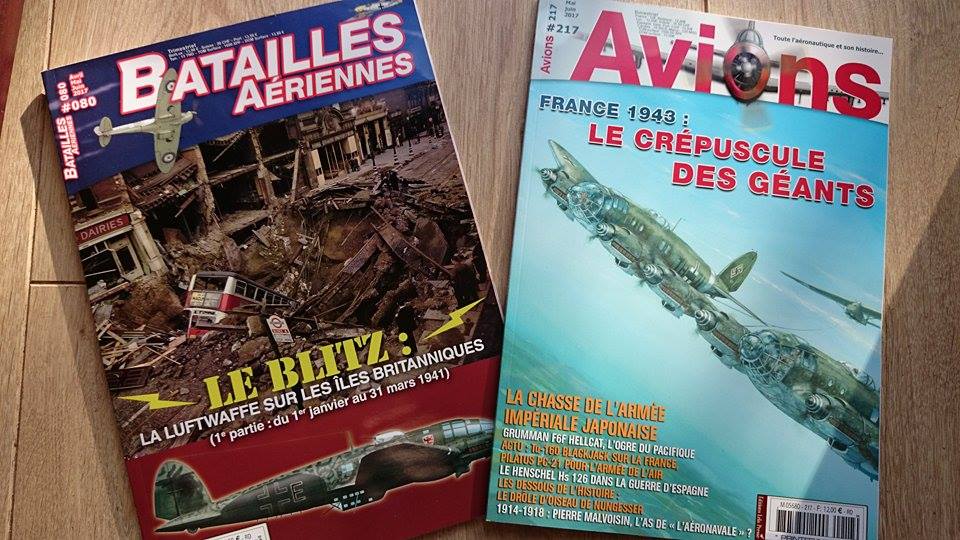
In addition to the second installment of their " Hs 126 in Spain " article the latest issue of  'Avions' magazine (No. 217) covers the He 111 Z in 24 pages in an article entitled 'Twilight of the giants -France 1943' and authored by Dan Gilberti and Jean-Louis Roba . The Zwilling (lit. 'Twin') was constructed in small numbers by the expedient of mating up two He 111 H-6 bombers, joining them at the outer wing section and adding a fifth Jumo 211 F engine at the wing join section. The resulting craft had a wingspan of 35 metres and was a thirty ton machine fully laden. Conceived for the task of hauling the largest glider in the history of aviation  - the Me 321 - the five Jumos each developed some 1350 hp and with supplementary tanks the aircraft could carry some 10,000 litres of fuel. Range in this configuration was 4,000 km. Interestingly the crew - usually of seven depending on the number of gunners - was divided between the two fuselages, with the principal controls in the port fuselage (left)  - although there was a pilot in each fuselage section. The authors have discovered that in addition to two prototypes - Z V1 and Z V2 - some fourteen Zwillingsflugzeuge were constructed  - not the ten usually quoted. The Zwillinge operated both on the Eastern Front and - more unusually - over France.

Below; Me 321 'W6+SW' of the GS-Kdo.2 (Grossraumsegler) seen in the Kuban at Sslawjanskaja just weeks after the fall of Stalingrad in mid-February 1943. He 111 Z-1 'TM+KI' is on the right of the image in the background. The two Bf 109 G-2s are 'white 3' of 4./JG 52 and the 'chevrons + bars' of the Kommodore Major Dietrich Hrabak. Low res image copy courtesy of Michel Ledet via J-L Roba.


The Zwillinge were subsequently assigned to I./LLG 2 and first deployed in early 1943 to the Crimea on glider towing duties. The huge machines arrived in France (Nancy) in April 1943 and from July to September operated out of Istres (south of France) flying troop transporter missions for the Italian front...a pdf extract of this issue can be viewed at the Lela Presse site here


The Luftwaffe's 'Blitz' against England is another richly illustrated monograph from Jean-Louis Roba, covering the period from 1 January 1941 to 31 March 1941. The title opens with a detailed over-view of the Luftwaffe's Kampfgeschwader assembled for this night assault on the British Isles. Not had a chance to read this one yet, but as usual with Jean-Louis, I would expect a pretty comprehensive look at the subject, with plenty of rare photos and Dekker profile artworks. French text. Do take a look at the pdf extract on the Lela Presse web site here


Also from Lela Presse and due soon is Philippe Saintes study of Me 262 losses - according to the publisher's blurb, a work not thus far undertaken in either English or German.  Over 250 photos, 25 artworks and a full list of losses and also featuring numerous pilot biographies. French text. Pre-order your copy here


Wednesday, 22 March 2017

The story behind the Luftwaffe book(s) - 100 Jahre Blankensee, Die dunklen Jahre und Die Spur des Löwen - Alexander Steenbeck


Interview with Alexander Steenbeck. I've kept our chat - or at least Alex's replies - in his original German for my German readers and added a quick and rough translation for those readers who don't know German.. 

" ..Alexander, could you please tell us a little about yourself as a person, writer and historian ? I believe you trained as a journalist…"

 Ja, ich arbeite seit mehr als 20 Jahren in der Medien-Branche, seit zehn Jahren in einem der größten Medienhäuser Norddeutschlands. Ich habe in Hamburg Geschichte, Journalistik, Betriebswirtschaftslehre und Politik studiert. Die Kombination aus Beruf und Studium ist für meine Arbeit als Autor sehr vorteilhaft.

"..Yes, I've been working in the media industry for more than 20 years, for ten years in one of the largest media houses in North Germany. I studied history, journalism, business administration and politics in Hamburg. The combination of work and study is very advantageous for my work as an author..."

"..What prompted you to want to write books about Luftwaffe history and publish them yourself ?.."

Ich interessiere mich intensiv für die Fliegerei seit meinem elften Lebensjahr. Bereits im Jahr 2000 hatte ich so viele Unterlagen aus der Luftwaffen-Zeit zusammengetragen, dass ich auf die Idee kam, dieses Material anderen nicht vorzuenthalten. Es entstand 2002 mein 1. Buch (LBC – Lübeck-Blankensee), das im Lübecker Steintor-Verlag erschienen ist. Später wollte ich Layout und Umfang  lieber selbst bestimmen; 2008 und 2012 nahm ich das selbst in die Hand und veröffentlichte Buch 2 (Die dunklen Jahre) und 3 (Die Spur des Löwen).

"..I have been very interested in aviation and flying since I was eleven years old. As long ago as the year 2000 I had collected so many documents from the Luftwaffe period that I came up with the idea to make this material available to others. My first book (LBC - Lübeck-Blankensee) was published in 2002 by the Lübeck-based Steintor-Verlag. Later on I decided that I wanted to determine layout and scope myself. In 2008 and 2012, I took matters into my own hands and self- produced and published book 2 Die dunklen Jahre and then book 3 Die Spur des Löwen..."


"Alexander, your book 'Die dunklen Jahre' told the story of Lübeck-Blankensee during the period 1933-1945. For readers who don't know this book what sort of missions were flown from this airfield, especially in the last months of the war?  Can you tell us about some of the characters you met during your research ?"


Lübeck-Blankensee war ein Fliegerhorst, der durchweg eine wichtige Rolle in der Luftwaffe gespielt hat. Zu Beginn des Krieges als Drehscheibe für Einsätze gegen England und Skandinavien, 1944/45 war der Platz einer der ersten Plätze im Reich, der für Düsenflugzeuge ausgebaut wurde. In den letzten Kriegswochen nutzten Ar 234-, Me262- und He162-Verbände ihn für Einsätze oder auch als Einsatzbasis. Blankensee war von 1938-45 Heimat des KG 26, zudem dessen Ausbildungsbasis der IV. Gruppe. Außerdem diente der Platz der Flugzeugindustrie - insbesondere den Heinkel-Werken - als Umrüstort. Und es waren nicht nur bekannte Flieger wie Herbert Altner, Walter Briegleb und Co., mit denen ich für meine Bücher im Austausch stand. Vielfach waren es gerade die weniger oder gar unbekannten Luftwaffenangehörige, die meine Arbeit wesentlich voran gebracht haben. Ironischer Weise habe ich die detailiertesten Schilderungen rund um Blankensee von denen, die nicht geflogen sind; von den Technikern, Zivilangestellten und dem Verwaltungspersonal. In Sachen KG26 verhält es sich ähnlich, zumal nur wenige Besatzungsmitglieder die Flüge überlebt haben.

"....Lübeck-Blankensee was an airbase that played an important role in the Luftwaffe. At the beginning of the war it was a key airfield for missions against England and Scandinavia. During 1944/45 it was one of the first bases equipped for jet operations. In the last weeks of the war the Ar 234, Me 262 and He 162 all flew from here. The field was also home to KG 26 throughout the war. The German aircraft industry in general - especially the Heinkel factories used the airfield. And it wasn't just well-known fliers like Herbert Altner, Walter Briegleb and co. with whom I was in contact for my books. In many cases it was precisely the 'lesser' or even unknown members of the Luftwaffe who have significantly advanced my work. Ironically, I have the most detailed descriptions around Blankensee from those who were not airmen - from technicians, civilian employees and administrative staff. In terms of KG 26 it was a similar story, especially since only relatively few crew members survived their combat sorties...."


 " ..How did your interest in KG 26 develop ? What was your aim in writing the history of this unit ? "


 Die Heimat des KG 26 ist auch meine Heimat: die Hansestadt Lübeck. Es gibt sehr viele Verbindungen des Löwengeschwaders zur Luftfahrtgeschichte Lübecks.Das Geschwader prägte die Fliegerei hier mehr als ein halbes Jahrzehnt, viele der ehemaligen Flieger und ihre Familien leben bis heute hier. Die Recherchen zu meinen ersten beiden Büchern brachten insofern sehr viel Material über das KG 26 hervor. Gleichzeitig war das Buch „Achtung Torpedo los!“ von Rudi Schmidt längst überholt. Was lag da näher, als das Material über das KG 26 in einem neuen Buch zu veröffentlichen?

"..KG 26 and its men had their home in my home so to speak; Lübeck. The 'Lion Geschwader' has so many connections with the aviation history of the town; many of the former Geschwader members and their families still live here. During the research for the my first two books I accumulated so much material on KG 26. At the same time Rudi Schmidt's 'standard' work on the Geschwader „Achtung Torpedo los!“ was in need of revision and an update. It seemed self-evident to publish all this material in a new book.."

"..How much time was devoted to the research and writing of this particular book ? And your other books ? 

 Die Recherche war und ist nicht kontinuierlich. Forschung hört ja nie auf. Das Zusammentragen, Schreiben und Produzieren des Buches hat rund ein Jahr gedauert und somit ähnlich lange wie bei meinen anderen Büchern. Generell ist die Arbeit aber nicht abgeschlossen. Schade ist nur, dass nachträglich auftauchendes Material nicht in die Chronik(en) eingebunden werden kann, so dass jeder Leser davon partizipieren kann. So etwas funktioniert nur bei Online-Veröffentlichungen wie beispielsweise von Andreas Zapf.

".. research was and is not continuous. Research never ends. Compiling, writing and producing the book lasted for about one year, which is similar to my other books. Generally work like this is never finished. It is only a pity that material that emerges later can not be included in the chronicle (s), so that every reader can share in it. This is only possible with online publications such as the research undertaken by Andreas Zapf..."

"..How were you received by the veterans themselves and how did they react to the work..?"

“Die Spur des Löwen” ist die erste Chronik, die nicht von und für Veteranen gemacht wurde. Die Ausrichtung konnte so eine andere sein. Die Reaktionen, die ich – auch von Seiten der Ehemaligen – erhielt, waren durchweg positiv. Es gab Lob und Anerkennung für diese neue, umfassende Darstellung der Einsatzgeschichte des KG 26.

"..."The Trail of the Lion" is the first chronicle not made by and for veterans. The way the book is set out is different. The reactions that I received, including on the part of the vets, were consistently positive. There was praise and appreciation for this new, comprehensive presentation of the combat history of KG 26..."

Below; book extract from Alexander Steenbeck's Die Spur des Löwen. Decorated rudder of Konrad Hennemann's He 111 H-6. Hennemann and his crew flying He 111 H-6 "1H+GH" went down on Saturday 4 July 1942 after launching an attack against the British freighter Navarino sailing in PQ 17. Hennemann was awarded a posthumous RK and is still listed as missing.


“ You published a long extract –in English – from your KG 26 history in The Aviation Historian (issue 8). How did that come about? Does this mean that your book will be translated one day?”

Der Artikel im Aviation Historian war Material, das mir erst nach der Veröffentlichung von “Die Spur des Löwen” vorlag. Britische Luftfahrtmagazine sind eine sehr gute Alternative zu den deutschen Magazinen, so lag es nahe, die Geschichte vom Bombenunglück der II./KG 26 in Gabbert in England zu veröffentlichen. Eine Übersetzung meines Buches wurde häufig nachgefragt. Doch der Buchmarkt für Luftwaffen-Literatur wird immer schwieriger. Insofern muss man sich allein aus kaufmännischen Gesichtspunkten vorrangig die Frage nach den Käufern stellen. Und die werden, was diese Spezialliteratur angeht, immer weniger.

"..The article that appeared in the Aviation Historian was essentially material that I uncovered after the publication of my book... I'm often asked whether a translation of my book will ever appear but the book market especially for Luftwaffe books is getting ever more difficult. You have to ask yourself purely from the sales point of view who would buy it as such interested readers are growing less and less.."

" Is there any one piece of information or fact that you uncovered in your research that you are especially proud of..? Can you tell us about your proudest and most frustrating moment as a writer ? "

Das Ausmaß der Einsätze gegen Schiffe ist erstmals anders geschildert, als im Buch von Rudi Schmidt oder in der deutschen WK-II-Propaganda, die bis heute noch ihre Wirkung behalten hat, wenn man so manche heutige Veröffentlichung genauer betrachtet. Die übermäßigen Erfolge des KG 26 konnte ich relativieren, ohne die Einsatzleistungen der Besatzungen zu schmälern. Zudem habe ich sehr viel Bildmaterial zusammengetragen, auf das mich viele Leser angesprochen haben. Negativ war während der Vorarbeiten zum Buch der Kontakt zu einigen Sammlern. Manche hüten lieber ihre Schätze, als sie zu veröffentlichen oder Forschern zugänglich zu machen. Schade war auch der Kontakt zur Familie von Rudi Schmidt. Ich hätte mir auch eine überarbeitete Fassung von „Achtung Torpedo los!“ vorstellen können, aber die Familie blockte Kontakte ab. Angeblich sei Schmidts Nachlass komplett in den Müll gewandert, hieß es. Trauriges Ende seiner Recherchen zum KG 26.

" ..the extent of anti-shipping operations is probably portrayed somewhat differently from how they have been in Rudi Schmidt's book or in war-time German propaganda which even today has retained its impact, as a close look at certain publications demonstrates. I was able to put the supposed great successes of KG 26 into some sort of context without besmirching the reputations of the crews that flew these sorties. In addition, I compiled a lot of picture material, which many readers have been pleased with. One not so positive outcome was during the preliminary work for the book - contact to some collectors. Some prefer to keep their treasures for themselves rather than publish them or make them accessible to researchers. Also a disappointment was the contact I had with the family of Rudi Schmidt. I could have imagined maybe writing a revised version of "Achtung Torpedo los!", but the family blocked all communication. Supposedly Schmidt's estate had been disposed of, thrown out with the rubbish I was told. If that was indeed the case then it was a sad end to his research on KG 26.."

"..Do you have any projects that you are working on currently?.."

 ..Ja, Ich habe gerade mein neues Buch veröffentlicht, das sich mit der 100-jährigen Geschichte des Lübecker Flughafens beschäftigt. Es ist immer wieder erstaunlich, was nach vielen Jahrzehnten aus privater Hand oder aus Archiven noch an Material auftaucht. Man darf also gespannt sein!

"..Yes, I've been working on a new book - which is just published - dealing with the history of Lübeck Airport, which will be 100 years old in 2017. It is always surprising, even after many decades, how much material from private hands or from archives still appears. Plenty of reasons to be excited !.."

"...Alexander, thank you for answering my questions, thank you for your superb books and good luck with sales of the new book which is now available. More about "100 Jahre Blankensee" can be found here: www.100-jahre-blankensee.de


Training centre, operational base for torpedo and jet bombers during WWII, regional airport and several times threatened with closure, Lübeck Airport has had a turbulent history. Aircraft have been taking off and landing in Blankensee, one of the oldest airfields in Germany for 100 years. The first buildings were built in 1916 but up to the late 1940s the present airport served purely military purposes. Only after the fall of the Iron Curtain did civilian use really come to the fore, but even then new developments proved controversial with the coming and going of private investors at the beginning of the new millennium. With what is now his fourth book, Alexander Steenbeck describes the ups and downs of Lübeck Airport, reveals its developmental history, and summarises his years-long, meticulous research into Lübeck's aviation history. More than 500 unpublished photos, plans, tables and documents illustrate a century of aviation in the Hansestadt. The book "100 years of Blankensee" supplements and completes the author's works, published so far on the history of Lübeck Airport (see above).


 Units based in Lübeck Blankensee during WWII include the Immelmann-Geschwader (II./StG 162 und I./StG 167) as well as the Löwengeschader (KG 257, later KG 26 ), but also the Ju 88 nightfighters of Nachtjagdgeschwader 5 (principally III./NJG 5 ). Blankensee was also developed for jet deployments, in particular the Messerschmitt Me 262s of "Kommando Welter", 10./NJG 11, and the Ar 234 jets of KG 76. Late on elements of Nachtschlachtkommando 9 flying Bücker Bü 181 training machines carrying Panzerfauste and Splitterbomben also flew from Blankeesee as the British closed in around the Elbe bridgehead around Hamburg. Some of the last sorties of the war were flown by He 111s of KG 4 launched on re-supply missions over Berlin on 4 May 1945.

Probably the last movements of the war saw three Ju 188 and 11 Ju 88 torpedo bombers belonging to KG 26 land at Lübeck-Blankensee on 8 May 1945 after their flight to the Kurland pocket from where they had helped to evacuate German soldiers. Evading three Russian fighters by letting down to wave top height after crossing the coastline, Ju 88 "1H+KM" flown by Lt. Horst Naumann was one of up to forty aircraft from various units that flew from Norway to Courland returning into Lübeck-Blankensee late into the evening of 8 May 1945 with up to eight so-called 'Kurland Flüchtlinge' ('Courland refugees', ie soldiers, Landser)  on board to be greeted by British troops who had taken the airfield on 2 May.

(" As the British drove across the airfield we stood outside the workshops in our overalls waiting for what was to come - in the end we were greeted in a friendly way, some even waved at us - not at all the reception we would have dreamed of expecting..")


Above and left; Ian Calderwood's father took a series of excellent images at Lübeck-Blankensee in 1945 which have been posted on flickr here


More author interviews on this blog;

-  Jan Forsgren, author of the Fonthill Media title "The Junkers Ju 52 Story" here

- The story behind the Luftwaffe book - John Vasco's 'Bombsights over England -Erprobungsgruppe 210 in the Battle of Britain' here

- The story behind the Luftwaffe book(s)  - a chat with the doyen of Luftwaffe book authors - Eddie Creek here